About DrAlice

Dr. Alice Cash is one of the world’s few clinical musicologists. Based in Louisville, Kentucky, USA, she brings to her work over 40 years of professional experience as a college professor, clinical therapist, solo and chamber music performer and composer. Since 1990, Dr. Cash has been in the field of Music Medicine and conducted clinical research at the University of Louisville School of Medicine, under the guidance of Dr. Joel Elkes, Dr. Leah Dickstein, and Dr. Rif El-Mallakh. Her clinical work at the University of Louisville lead to her career in music medicine. In addition to her work with the University of Louisville, Dr. Cash lead the development of using music a hospital setting at Baptist East Hospital, Louisvile, KY. She has founded 3 companies: Healing Music Enterprises, Surgical Serenity Solutions and Crescent Hill Counseling.
"Tune Your Life with Music!"

What’s the most common fear in surgery?


FacebooktwitterpinterestlinkedinmailFacebooktwitterpinterestlinkedinmail

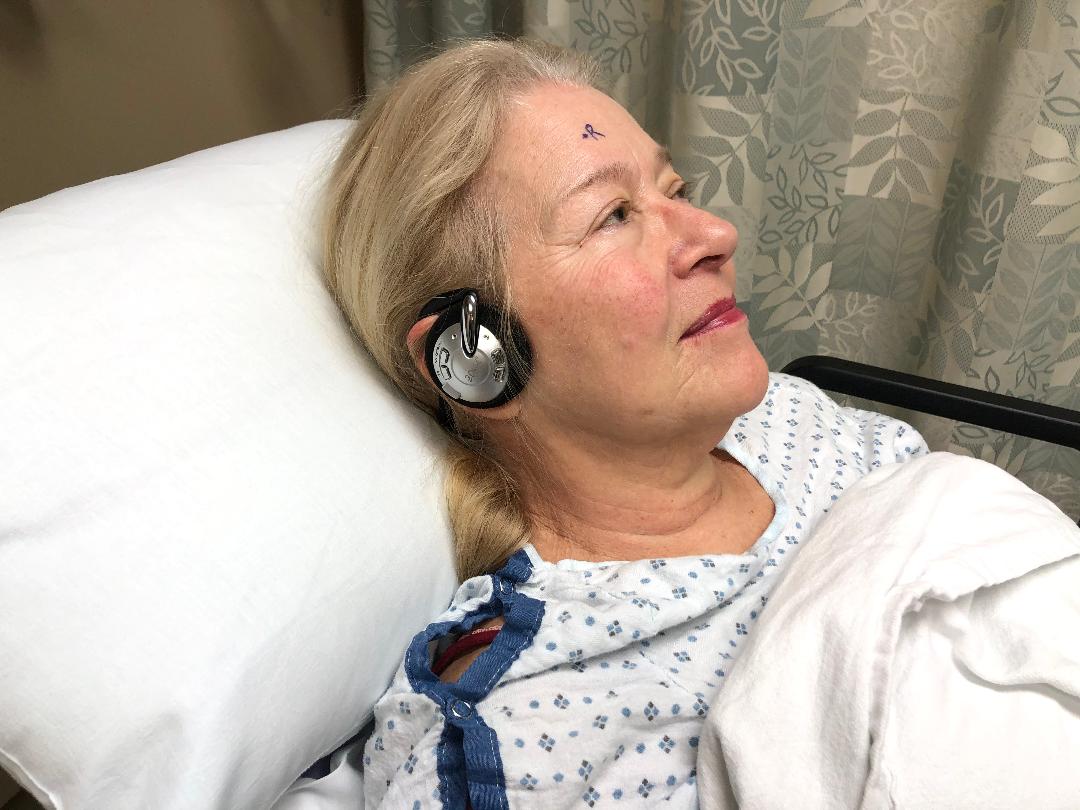
listening to the calming, rhythmic entrainment music prior to surgerySince I originally wrote this post in 2007, we have really come a long way!  In 2007 we had not yet received our U.S, Patent or actually started our first ever model of the Surgical Serenity Solutions headphones!

Now, not only are we on model 3.0, we also have 4 additional playlists as well as a Mobile App in the Apple App Store and the Google Play Store

To download the free app, go to www.SurgicalSerenitySolutions.com/calm

You can listen to samples of all 5 playlists and then choose the one you want!

The clinical research study printed below has been a key for many people to understanding how calming music works to decrease fear and anxiety, as well as to decrease pain perception.  After almost 25 years of working with patients both pre and post surgery, I can emphatically state that using music as a way to prepare for your surgical experience, as well as to calm your pain and fears after the procedure is over is both effective and absolutely without side-effects.

Hundreds of patients have used the Surgical Serenity Solutions pre-loaded headphones for procedures such as:

  • Hip Replacement and other joint replacement surgeries
  • Endoscopies and Colonoscopies
  • Brain surgery
  • Abdominal aeortice aneurysm
  • Kidney and bladder procedures
  • C-sections
  • Labor and Delivery naturally
  • Root canals and other dental procedures


Copyright Priory Lodge Education Ltd. 2007

Preoperative fear and anxiety have always been the concern of the patients as well as the anaesthesiologists and the surgeons. Preoperative patients have various kinds of anxiety (Badner et al, 1990, Hashimato et al 1993, Millar et al 1995, Moerman et al 1996,). However we do not know much about their psychological burden. Much study has been conducted on pre-anaesthetic assessment and the methods to relieve patient anxiety and fear (Badner et al, 1990, Hashimato et al 1993, Kindler et al 2000, Klopfentein et al 2000, Mc Gaw et al 1998, Millar et al, 1995, Moerman et al 1996, Nomura et al, 2000, Shafer et al 1996, Sanjuan et al 1999). But do we really know what the patients are afraid from? Do they want to be informed? Will this information help relieve their anxiety and what personal factors effect their anxiety or anaesthetic choices?
The aim of this study was to assess the fears, worries, anxiety and the demand for getting information of the patients, as well as their choices regarding anaesthesia and surgery.

www.surgicalheadphones.com 

OR

www.SurgicalSerenitySolutions.com/patient-products

Material and Methods

This study was conducted in the University Hospital Anaesthesiology Department in a city with a population of 2 200 000.
During routine preoperative screening, 536 adults (>19 years) were questioned one day before surgery, about their anxiety or fears or worries and information requirements by using a questionnaire consisting of open and closed ended questions. Interviews were performed face to face by the same anaesthesiologists.
In addition, visual analog scale (VAS:0-100) was used to measure the level of anxiety of the patients by asking them to express the amount of their fears, anxiety and stress in number and mark it on the VAS scale (Kindler et al, 2000).

The answers were categorised and then analysed using the Chi-square test. The relationship between the patients gender, education, income and previous anaesthetic experience were assessed with the answers given to questions 1-9 in the questionnaire with using regression corelation analysis. p<0.05 was considered as significant.

Results

Of the 536 patients audited 271 were male (50.6%) and 265 female (49.4%). The numbers of male and female patients were similar (p>0.05). The mean age was 44.7±15 (range 19-80). Eleven percent (60) of the patients were scheduled for operations for malignancies, 76.7% (411) for non-malignancy. Twelve percent (65) of the patients were undiagnosed.
Sixty six percent of our patients correctly defined the mean of anaesthesia.

Education: Correctly defining the word anaesthesia correlated with the degree of education. 98.1% of university graduates, 82% of secondary school graduates and only 51.9% of illiterates and primary school graduates knew the meaning of anaesthesia.

Illiterate or primary school graduates had more fears or worries about surgery when compared with the higher educated patients (p<0.05).

There was no significant correlation between the educational status of the patients and fear from anaesthesia.

Fifty three percent of university graduates preferred local or regional anaesthesia compared to 42.9% of secondary school and 35.2% of primary school graduates (p=0.004).

As education gets higher, the percent of patients that want to get informed also increase. The percent of patients who requested information on anaesthesia were 27.8%, 39.6% and 41.8% in the primary school, secondary school and university graduate groups respectively (p=0.007).

Gender: Gender did not influence the percent of patients who correctly defined anaesthesia (male 57.7%, female 46.0%) (p>0.05).

Women expressed more fear or worries about both anaesthesia and surgery when compared to men (p=0.0001). 17.7%, 24.0% of men and 34.3%, 43.4% of women feared anaesthesia and surgery respectively.

The most feared aspect was “not waking up” after anaesthesia and surgery which was similar between the sexes.

Despite 54.2% of men, only 25.7% of women preferred local or regional anaesthesia (p=0.00001).

Income: As income increases, percent of patients with anaesthetic fear also increases.

The percent of patients who expressed fear were 17%, 29.7% and 40.7% in the low, average and high income groups respectively (p=0.00165). The increase in fear from surgery was not significant between the income categories (p>0.05).

As personal income increases, the percent of patients requesting information increases.

The percent of patients who requested information on anaesthesia were 25.5%, 37.7% and 44.4% in the low, average and high income groups respectively (p=0.01).

Previous experience: 37.4% of patients without previous anaesthetic experience and 27.8% with previous anaesthetic experience requested information about anaesthesia (p=0.017).

VAS scores: Women scored higher than men and subjects with an educational level of primary school or lower scored higher than did high school and higher education graduates in VAS measurement (p<0.05).

There was no correlation between the increase or decrease of income and demand for information and VAS scores (p<0.05).

VAS scores were lower in subjects with a history of surgery and anesthesia(p<0.05).

Discussion

Fear is considered as a normal feeling that always accompanies people throughout life. It is a compound phenomenon that has psychological, motor, somatic-vegetative and metabolic components.

Even the thought of operation and anaesthesia increase the feeling of anxiety.

The dimension of fear has inconvenient influence on the time of recovery, quantity of complications and the discomfort felt by patients.

The incidence of preoperative anxiety was reported as high as 60% of surgical patients (Hashimato et al 1993).

The dimension of the fear can be measured in many ways.

The questionnaires are one of the methods of taking an objective measurement.

Mostly used questionnaires are “Amsterdam Preoperative Anxiety Information Scale (APAIS)”,

“Spielberg’s State-Trait Anxiety Inventory (STAI-State)” (Moerman et al 1996),

“Hospital Anxiety and Depression Scale (HAD)” and

“100mm visual analogue scale (VAS)”( Millar et al, 1995),

“Multiple Affect Adjective Check List (MAACL) (Badner et al, 1990).

The STAI is used frequently. Recently, VAS became popular in evaluating preoperative anxiety and fear (Badner et al, 1990, Kindler et al 2000, Klopfentein et al 2000, Millar et al, 1995, Shafer et al 1996).

In fact, many studies indicate that monitoring of anxiety can be very useful in decreasing fear.

Determining the factors affecting anxiety and fear can be useful to correctly define and decrease them.

We aimed both to measure anxiety or fear of patients and also to evaluate the factors effecting anxiety and fear. We used a simple questionnaire and VAS .

In our study most of the patients stated that they had no anxiety or worry about anaesthesia (71.3%) or surgery (64.4%).

This may partially be a reflection of the belief in faith.

We considered that the religious culture influences people more in stress-full conditions. Religious belief requires belief in faith and destiny. This belief may have had an increasing influence on the high rate of patients without fear.

To trust to University hospital conditions was second important factor which effecting patients without any worries about the anesthesia whereas to trust to surgeon which effecting patients without any worries about the surgery. Nomura et al (2000) stated that, preoperative patients feel various kinds of anxiety. In Nomura’s study, the patient’s anxiety varied depending on their previous experiences of anaesthesia, anaesthetic methods previously received and age of the patients.

In addition, type of surgery is also important according to Nomura et al. While the patients undergoing orthopaedic operations were more anxious about postoperative pain, the patients undergoing gynaecological procedures were more anxious about accidents due to anaesthesia.

Our questionnaire did not include type of the operation but we found no relationship between malignancies and fear or anxiety.

Young patients were found to be more anxious in previous studies (Kindler et al 2000, Mc Gaw et al , 1998). In our study there was no difference in the reasons of anxiety and fear between the age groups.

Patients with higher education requested more information on anaesthesia and also preferred regional anaesthesia to general anaesthesia in our study.

Education was only considered in one previous study (Mc Gaw et al , 1998). In Moerman et al study (1996), patients with a high information requirement had a high level of anxiety and patients who had never underwent an operation had a higher information requirement than those who had previous operation.

In our study, female gender feared more about anaesthesia when compared with male patients. Our results are inconsistent with previous studies (Badner et al, 1990, Kindler et al 2000).

According to a study conducted in Spain (Sanjuan et al, 1999), the most common fear is “not waking up”.

In a study from Switzerland (Badner et al, 1990), three kinds of fear were noted among surgical patients; 1- the fear of the unknown, 2- the fear of feeling ill, 3- the fear for one’s life.

In a study from Jamaica, the most common fear was death on the operating table. In our population, most of patients had no worries about anaesthesia or surgery. If he/she worried about anaesthesia, most feared was not waking up. When asked about surgery, our patients worried from ” failed surgery”. The type and reason of fear may vary with nationality.
Income was not investigated as a factor in previous studies. More patients in the high income group have fears on anaesthesia when compared with the lower income group.
Determining the reasons and factors influencing preoperative fear and anxiety in our population may help us in the management of our patients. Proper management of fear and anxiety by the anaesthesiologist may provide better preoperative assessment, less pharmacological premedication, smoother induction and maybe even better outcome. Further studies on preoperative anxiety are needed to evaluate the impact of anxiety and fear management on surgery and outcome.
In summary, most of the patients did not have fear or felt anxious about both the anesthetic and the surgical procedures, preoperatively. This was found to result from religious believes. Women and patients from a lower education level were the most to feel anxious and fearful, preoperatively. Anesthesia was defined properly by 66% of the patients, but they were not aware of both the anesthetic procedure and the role and identity of the anesthetist. Although, the feeling of trust for the surgical team was one of the factors that prevented fear and anxiety, we observed that most of the patients did not have enough information about their illnesses (especially malignancies) and the surgical procedures they would run through. Informing the patients on the anesthetic and the surgical consequences of their planned operation, preoperatively, can play an important role in preventing anxiety and fear. Especially the women and patients from lower educational level must be informed in more detail. We think VAS could be used to measure preoperative anxiety, as there was a positive correlation between VAS scores and the results obtained with the anquette method.
We concluded that visuel analog scale may be useful for assesing the preoperative anxiety and fear. Nationality and religious belief can effect the behaviour related with preoperative anxiety and fear. Further studies are needed.

References

Badner NH, Nielson WR, Munk S, Kwiatkowska C, Gelb AW. (1990) Preoperative anxiety: detection and contributing factors. Can J Anaesth Vol. 37, 444-7.
Hashimoto Y, Baba S, Koh H, Takagi H, Ishihara H, Matsuki A. (1993) Anxiolytic effect of preoperative showing of anesthesia video for surgical patients. Anesth Analg Vol . 42, 611-6.
Kindler CH, Herms CH, Amsler F, Ihde Scholl T, Scheidegger D. (2000) The visual analogue scale allow effective measurement of preoperative anxiety and detection of patients anesthetic concerns. Anesth Analg Vol . 90, 706-12.
Klopfenstein CE, Forster A, Van Gessel E. (2000) Anesthetic assessment in an outpatient consultation clinic reduces preoperative anxiety. Can J Anaesth Vol . 47, 511-5.
Mc Gaw CD, Hanna WJ. (1998) Knowledge and fears of anesthesia and surgery. The Jamaican perspective. West Indian Med J Vol . 47, 64-7.
Millar K, Jelicic M, Bonke B, Asbury AJ. (1995) Assessment of preoperative anxiety: comparison of measures in patients awaiting surgery for breast cancer. Br J Anaesth Vol . 74, 180-3.
Moerman N, Van Dam FS, Muller MJ, Oosting H. (1996) The Amsterdam preoperative anxiety and information scale (APAIS). Anesth Analg Vol . 82, 445-51.
Nomura M, Saeki S, Ogawa S, Tai K, Kajiwara K. (2000) Preoperative questionnaire survey about anxiety of patients for scheduled operation. Masui Vol . 49, 913-9.
Shafer A, Fish MP, Gregg KM, Seavello J, Kosek P. (1996) Preoperative anxiety and fear: a comparison of assessment by patients. Anesth Analg Vol . 83, 1285-9
Sanjuan M, Gimeno B, Sariano PMJ, Bazan MR, Contin GA. (1999) Pyschological distress and preoperative fear in surgical patients. Rev Esp Anesthesiaol Reanim Vol . 46,191-6.

Copyright Priory Lodge Education Ltd. 2007

First Published October 2007

FacebooktwitterpinterestlinkedinmailFacebooktwitterpinterestlinkedinmail

A True Story of Music and Surgery!

FacebooktwitterpinterestlinkedinmailFacebooktwitterpinterestlinkedinmail

Here is what I did to improve
my heart surgery experience …

… And Recover In LESS Time!
 

I fear going to the doctor. When I got married, I couldn’t even look at the nurse that did my blood test. A routine physical exam would leave me in a cold sweat and completely worn-out.

My dislike of the doctor’s office, the trip to the dentist, or a hospital visit was solved by “I just didn’t go to those places very often.” My health care system was based on “Denial of Need.” I would tell my wife:

          “I don’t need to do that.”  
          “I don’t feel that bad.”
          “I just need more sleep.”

The “Denial” system worked well when I was 21. I had no major medical situations when I was 31 or 41 or even 51. I was living a healthy life-style; I never had to spend the night in the hospital; I never had surgery.

At age 53, and over the next 10 years, my healthcare needs increased. I had a heart attack, open heart surgery, cardiac failure, and this year I had surgery to implant a defibrillator pacemaker. Turns out my family has a history of heart problems and my baby-boomer life-style wasn’t as healthy as I thought.

Am I still nervous or afraid of hospitals after 3 major surgeries and 4 hospital stays — Yes, but let me tell you what I did to improve my surgery experience:   Read More

FacebooktwitterpinterestlinkedinmailFacebooktwitterpinterestlinkedinmail

Pacemaker surgery…can music help?

FacebooktwitterpinterestlinkedinmailFacebooktwitterpinterestlinkedinmail FacebooktwitterpinterestlinkedinmailFacebooktwitterpinterestlinkedinmail

Music therapy in critical care: indications and guidelines for intervention.

FacebooktwitterpinterestlinkedinmailFacebooktwitterpinterestlinkedinmail

Have you ever been in a hospital, as a patient, for any reason?  If so, you know that a hospital is no place to get a rest.  A hospital is a noisy place with ambulances coming in and out, overhead paging of doctors and hospital information and patients and families conversing or perhaps in pain.

Then there are family members and visitors out in the halls, laughing, crying and talking loudly.  For people who are in ICU or PACU, it’s even harder because the patient feels so bad and is much sicker than they’ve ever been.

Music is such an easy intervention, especially headphones with a choice of favorite music.  And yet most hospitals still have the ubiquitous TV up on the wall with bad news, soap operas, etc. blasting away!  It really is quite inhumane I think! 

Just came across this bit of medical/nursing research on music in the hospital and wanted to share it with you immediately!

Crit Care Nurse. 1999 Jun;19(3):35-41.

University of Iowa, College of Nursing, Iowa City, USA.

Abstract

Music therapy is an effective intervention for critically ill patients for such purposes as anxiety reduction and stress management. The therapy is readily accepted by patients and is an intervention patients thoroughly enjoy. The MAIT is one resource that nurses caring for critically ill patients can use to implement music therapy in clinical practice. Patients can be given the opportunity to select a musical tape they prefer and to negotiate with the nurse for uninterrupted music-listening periods. Allowing patients control over music selection and providing uninterrupted time for music listening gives the patients an enhanced sense of control in an environment that often controls them.

FacebooktwitterpinterestlinkedinmailFacebooktwitterpinterestlinkedinmail

FAQ’s about type of music best for surgery

FacebooktwitterpinterestlinkedinmailFacebooktwitterpinterestlinkedinmail

I frequently get questions about which music works best for surgery.  Unfortunately, that’s not a simple question because musical taste is so personal.  But, I can definitely give you a few insights into this process:

1.  What kind of music is best for surgery?

Research has shown that music that has a slow, steady tempo, like that of the healthy resting heart-beat is best.  Also, this music should be purely instrumental, i.e., no lyrics.  This is because lyrics engage the left side of the brain and we tend to start analyzing the music and not just relaxing.

2.  Is a person’s age a factor in choosing the best music?

Definitely!  People tend to like the music that they grew up with and therefore will relax best with music that they have positive associations with.  We will soon introduce music from a wide variety of eras.

3.  Does the type/genre of music matter?

What matters most is that the music be slow and steady with no lyrics.  Music that fits this description can be found in jazz, R & B, Easy Listening, New Age, classical and many others.

4.   What if the doctors are playing their own music?

Doctors have been playing music in the OR for several decades now.  Unfortunately, the music they usually play has a faster tempo than what the patient needs and oftentimes it has lyrics that are not really conducive to relaxation.

5.  Can I just download your music onto my iPod?

Absolutely.  The current surgery soundtrack has been chosen specifically because it matches all the above criteria.  The current music is classical piano music but has been chosen because the style is familiar but the specific pieces are largely unfamiliar.  This is because it’s possible that someone who has played a well-known piano piece (like Fur Elise) and had a memory slip or some other mistake, does not want to be reminded of that during surgery.  If a person has time and means to have a personal consult with me, we can create together their ideal playlist for surgery!

Hope this helps you with your decision of whether or not to use music during your surgery.  Knowning that something so simple can help you to use less anesthesia, less anxiety meds and less pain medication makes it a very attractive option!

FacebooktwitterpinterestlinkedinmailFacebooktwitterpinterestlinkedinmail

Music during Surgery: Why and how?

FacebooktwitterpinterestlinkedinmailFacebooktwitterpinterestlinkedinmail

Day by day, the general public is gradually becoming aware of how critically important music can be during a surgical procedure.  Whether it’s heart surgery, a joint replacement or a C-section, music can calm the patient so that fewer chemicals are needed, resulting in a safer surgery and a faster recovery.

Physicians have known since the times of ancient Greece and Rome that music is healing and that it can and should be prescribed along with other therapies and treatments.  But until recently, most people assumed that a patient was asleep during surgery and couldn’t hear the music or respond to it.  That’s why the only music playing in the operating room was the surgeon’s music. 

Now people are understanding that the human body responds to the pulse of strongly rhythmic music even when the patient is asleep.  This is the principle of entrainment or synchronization of bio-rhythms with musical rhythms.  To read more about all of this simply go to www.surgicalheadphones.com and read previous posts on this blog!

FacebooktwitterpinterestlinkedinmailFacebooktwitterpinterestlinkedinmail

Surgical Pain and Proven Solutions

FacebooktwitterpinterestlinkedinmailFacebooktwitterpinterestlinkedinmail

“In the USA alone over 53 million patients undergo surgical procedures
each year. Despite most patients receiving pain medication, 50-75% of
patients report that they experience inadequate pain control
(Datamonitor). Pain is the most commonly reported reason for
readmission to hospital within 30 days of discharge or for admission
directly after surgery. There is a substantial opportunity for novel
and innovative medicines to expand and segment this developing
market.”
Vernalis: Post Operative Pain: V1003

One of the most novel recent solutions is the development of the “Surgical Serenity Music Headphones.”  These headphones are designed to entrain, or synchronize the pulse of the music to the beat of the patients heart and breathing.  This keeps the patient relaxed, even when they’re asleep, and allows for less anesthesia to still keep the patient comfortable.  After the surgery, the patient continues wearing the headphones into recovery and there they usually require less pain medication.

This is a novel, effective and low-cost solution that definitely merits further research!

FacebooktwitterpinterestlinkedinmailFacebooktwitterpinterestlinkedinmail

Does Music Help with Anesthesia Process During Labor and Delivery?

FacebooktwitterpinterestlinkedinmailFacebooktwitterpinterestlinkedinmail

Anytime anesthesia is used in childbirth, whether local, regional or general, augmenting the effect by adding music to the picture will be beneficial.  Especially in the case of childbirth, where the baby is also experiencing the anesthesia that mother receives, wearing the surgery headphones with calming, soothing music will be a plus!
Anesthetics: Options for Childbirth

Haven’t got time for the pain? From total unconsciousness to spinals and blocks, traditional medicine offers a range of pain relief, each with its own benefits and drawbacks.

Anesthetics, substances that cause partial or complete loss of sensation, have long been the most common pain relief for labor and delivery. Here are the most commonly used anesthetics.

General and Regional Anesthesia During Childbirth

Decades ago, women were commonly put under general anesthesia, which quickly puts the entire body (and mind, of course) completely to sleep. It’s the same stuff you’d get — usually inhaled, although sometimes it is delivered intravenously, or through a combination of routes — if you were having open heart surgery or a kidney removed. Though it’s extremely safe, it is as extreme as it sounds, which is why general anesthesia isn’t used today for childbirth unless an emergency cesarean is required and there’s no time to give a regional anesthetic (like a spinal block). General anesthesia can also be required in a difficult vaginal breech birth, to deliver the baby’s head.

What general anesthesia does: If you have to have general anesthesia, expect to be totally knocked out for the entire birth. You’ll wake up groggy, disoriented, perhaps restless, and with a sore throat from the endotracheal tube (used to ensure that you don’t breathe the contents of your stomach into your lungs). You’ll also probably be rather queasy and may vomit, and will have sluggish bowels and bladder. The effects vary from person to person.

Just as you’re sedated temporarily (to get you through the delivery), so too will your baby be (temporarily). To reduce the effect, the anesthesiologist will try to put you out very close to your actual delivery, reducing the amount of drugs that get through your system and into the baby.

Epidural During Childbirth
Your baby won’t be affected by an epidural, the pain relief of choice for half of all laboring women (including both vaginal and cesarean) delivering at hospitals. An epidural is also an anesthetic, but it is injected directly into the spine (technically, into the epidural space, which is located between the ligament that sheathes the vertebrae and the membrane that covers the spinal cord), and so the drug bypasses the bloodstream — making it safer for your baby. In the past, there was some concern that an epidural might increase the likelihood of cesarean section (because it might prolong the labor), but recent studies dispute that notion.

How epidurals are administered: It’s not an instant shot; an anesthesiologist must administer an epidural through a thin catheter that is inserted into your back, and it could take 15 minutes (or longer) for the drugs to kick in. But it could be given to you as soon as you ask for one — no need to wait until you’re dilated a certain amount (like three or four centimeters) as used to be recommended. Studies now show that even an early epidural doesn’t increase the chances of C-section as was once believed.

You’ll first be put on an IV (the effect of the drugs can sometimes dramatically lower blood pressure; the fluids will keep it from going too low). You’ll then have to lie on your left side or sit leaning over a table or your coach, and your back will be swabbed with antiseptic. You’ll feel the prick of a local anesthetic, and then a large needle (which you won’t feel) will be inserted into the epidural space. Through that needle, the anesthesiologist inserts a catheter — the thin tubing that will be left behind (and taped to your back) and through which the drug is delivered. The needle is then removed and you’ll be able to lie down again. You’ll also have a catheter inserted into your urethra (the loss of lower body sensation from the procedure means you also will have no idea when you have to pee).

How epidurals make you feel: Once the epidural starts working, your entire lower body will feel numb, including the nerves of your uterus, so you won’t feel the pain of contractions (you’ll note the tensing of your uterus and some pressure). Some women have trouble pushing on an epidural (because they can’t feel their body or sense the peak of the contractions); others report no trouble. If you do find you’re having trouble pushing, you can ask to have the epidural turned off for the pushing part. Afterward, you might feel cold, experience numbness on one side of your body, and you’ll be a bit rubbery-legged.

Combined Spinal Epidural
Another epidural option is the combined spinal epidural, a type of epidural available only in some hospitals (ask your practitioner if it’s available in your hospital). The anesthesiologist starts the mom off with a shot of anesthetic directly into the spinal fluid to help relieve some pain, but because the anesthetic is only in the spinal fluid, the woman can still feel and use the muscles in her legs (which is why it’s also called a walking epidural). When the woman feels she needs more pain relief, more medication is placed into the epidural space (through a catheter that was inserted at the same time the spinal medication was administered).

Other Anesthetic Options for Childbirth

Other types of anesthetics you might get include a pudendalblock, which is injected into the perineal or vaginal area to reduce pain there (although you’ll still feel the full force of your contractions), a spinal block (for a cesarean delivery), or a low spinal or saddle block (for forceps assisted delivery or vacuum vaginal extraction). These are given as a simple shot into the fluid around the spinal cord. You’ll be numb, as with an epidural, and may feel queasy afterward. With a spinal, you’ll have to stay flat on your back for about eight hours after delivery.
 
source:  http://www.whattoexpect.com/pregnancy/

FacebooktwitterpinterestlinkedinmailFacebooktwitterpinterestlinkedinmail

Surgery Headphones Advisory Board has 1st meeting: 3/11/2010

FacebooktwitterpinterestlinkedinmailFacebooktwitterpinterestlinkedinmail

Tonight was an historical moment as my initial board of directors met!  Many exciting proposals and ideas were put forth and plans were made for my appearance at the Louisville Venture Sharks presentation in April !   Earlier today I received a shipment of 50 new headsets that I will now program with my proprietary music for surgery.  I’m expecting several waves of orders to come in soon from Mexico and California.  I’ve gotten orders from 8 different states as well as Mexico.  Of course some people are buying the digital download of the music only and putting it on their iPod.  You can get the music at www.HealingMusicEnterprises.com/surgical_music.  Exciting things on the horizon!

FacebooktwitterpinterestlinkedinmailFacebooktwitterpinterestlinkedinmail

Surgical Headphones FAQ

FacebooktwitterpinterestlinkedinmailFacebooktwitterpinterestlinkedinmail

The headphones have been on the market for almost a year now and I’m selling them (and the download) primarily to individuals.  Once the data is gathered and the proof of their efficacy is undeniable, I will begin marketing them to hospitals and surgical centers, in earnest. 

What I’ve noticed so far is that certain questions come up over and over.  I thought I would share them, and my response, with you now.

FAQ’s for Surgical Headphones
1.  Q.  Why do I need to get your surgical headphones?  Why can’t I just use my iPod?
     A.  Of course you can use your iPod (if your surgeon agrees).  The main reason to use my headphones is that there are no wires or cords to get in the way of medical devices being used and more importantly…the music has been especially chosen and sequenced by a clinical musicologist who has been studying what the best music for surgery is for 20 years!
2.   Q How do the headphones fit on my head?

      A The headphones fit behind the neck and hook over the ears. Both earpieces are padded and the headset is very comfortable.

3.  Q  Can the headphones also be used at home?

     A.  Absolutely! The headphones can be used anywhere, including outdoors, during exercise of any kind, or in bed.

4.   Q.  Can I change the music on the headphones later if I want to put some of my favorite music on them?

      A.  Yes you can.  You can completely remove the surgery music or you can leave it there and add 6-8 more hours of your own favorite music for relaxation, energizing, exercising or whatever you wish.

5.  Q.  Will the headphones be sterilized before surgery?
     A.  Your headphones will be brand-new when you receive them and won’t need to be sterilized.  You will probably try them out several times before your procedure to be sure you now how to turn them off and on as well as recharge them.  You might want to wipe them down with a disinfectant before you arrive at the hospital, but nothing else is necessary!

6.  Q.  How soon should I order them before my procedure?
    A.  It’s a good idea to order them as soon as you know you’re having surgery so that you can get familiar with them and even listen to the music numerous times.  However, they are very easy to operate and all you really need to know is how to turn them on.

7.  Q.  How long will the music play?
     A.  The music will play for 7-8 hours without needing to be recharged!  The surgery track is about an hour long and will repeat continuously until they are turned off!

I’m sure there are many more questions you might have, and feel free to contact me through the comment option on this blog or from my website http://www.healingmusicenterprises.com/. 

FacebooktwitterpinterestlinkedinmailFacebooktwitterpinterestlinkedinmail
Go to Top