

Music is as powerful as benzodiazepines







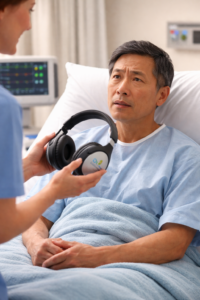 Having surgery is a frightening and stressful situation. Even before that, NEEDING surgery is a frightening and stressful situation.
Oftentimes people go to a doctor appointment thinking that they have just a few aches and pains, but nothing serious. After testing and examination, the doctor informs them that they will need surgery to correct a condition that will get worse or perhaps to replace a joint that will continue to deteriorate.
Sometimes, a routine medical test, like a colonoscopy or endoscopy can cause tremendous anxiety and stress. In these situations, doctors often prescribe benzodiazepines such as Valium, Xanax of Ativan. These modern drugs work very effectively, but like everything, there’s also a downside.
Benzodiazepines are intended for short-term use, but they work so effectively in terms of reducing anxiety and stress, that sometimes people want to keep taking them for much longer than intended. With severe overuse, or in combination with other drugs, like opioids, damage to the brain, liver, and other organs, can occur.
Now, a new meta-analysis published on the National Institutes of Health website documents that the right therapeutic music can be as powerful as benzodiazepines! This is great news.
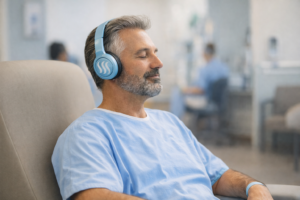 A significant percentage of patients had their perioperative anxiety level reduced (as measured by the Visual Analog Scale for Anxiety) with an effectiveness similar to benzodiazepines.
Surgical Serenity Solutions provides an easy solution for music medicine in the perioperative period
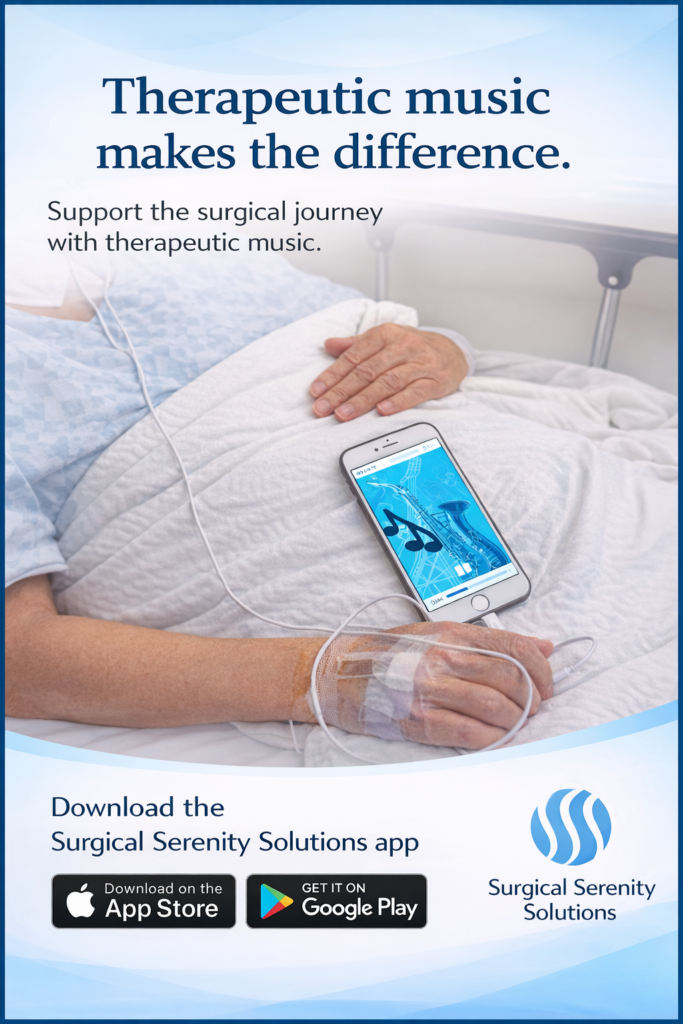
Surgical Serenity Solutions has been providing preloaded headphones and MP3 players for hospitals and surgery centers since 2009. Our therapeutic playlists have been curated and sequenced by a clinical musicologist and in 2018 we introduced our mobile app on both the Apple App Store and the Google Play Store.
Both hospitals and individual patients can purchase the preloaded headphones or the App to take into their procedures.
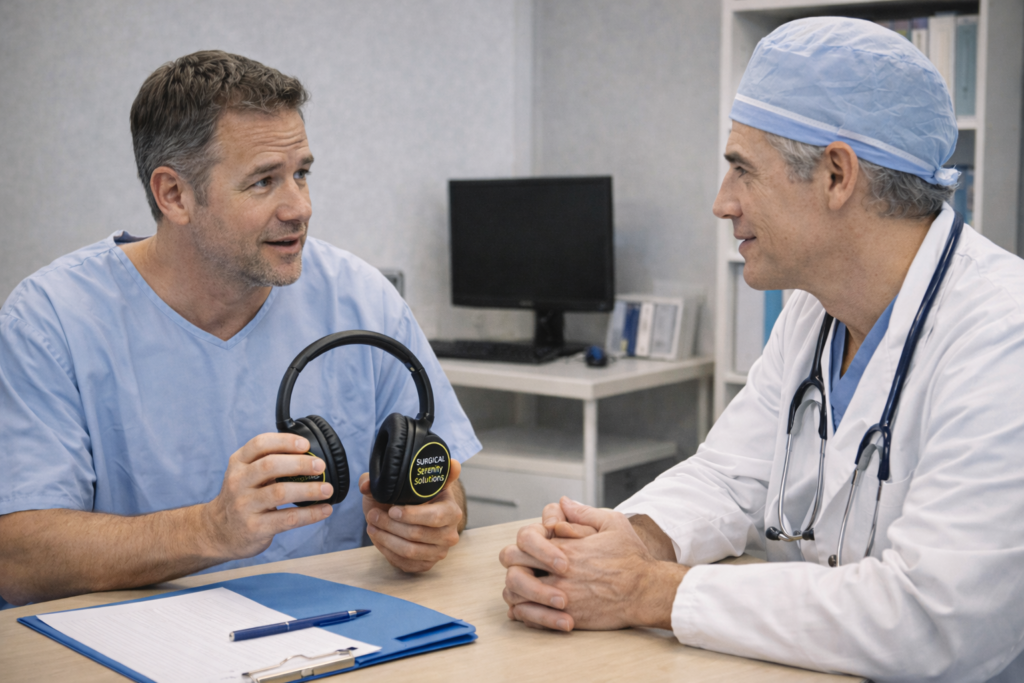
And now, dentists, opthalmologists, psychiatrists and all kinds of other specialists are using our devices in their clinics and recommending the app to the patients to listen to at home, before and after their procedures.
 Are YOU ready to step into the future with Surgical Serenity Solutions?
Our Hospital Starter Kit is a popular tool for hospitals and Ambulatory Surgery Centers to start their own Music with Surgery programs and give your patients the powerful gift of therapeutic music for their procedures.
Either the preloaded headphones or the preloaded MP3 players will be a huge asset for the patient filled with anxiety and perhaps, previous negative experience with anesthesia.
In addition, your patient satisfaction score will soar and your marketing department will have access to all of our articles, research and blog post for their daily blasts! Definitely a win-win.
Let me know if you have any questions or how we can help you get started!


 #1 customer. Music therapy has always been important at VA hospitals and that is actually where the modern day music therapy profession first took root, right after WWII when soldiers cam back with serious injuries and mental health issues that left them depressed and with PTSD (although that term was not yet used right after WWII.)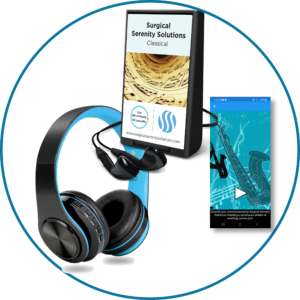


 Have you been to the dentist lately? A new friend of mine went last week and was telling me on a Tuesday how much she was dreading it on Thursday. Of course I could hardly wait to tell her about the Surgical Serenity Solutions playlists that so many people like to use during their dental procedures.
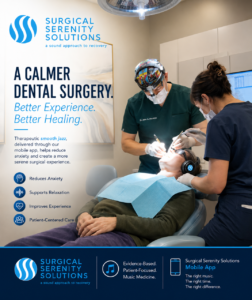 Then I began to think about creating a downloadable app for my playlists. One that anyone could download onto their phone before a patient had dental work or a colonoscopy or a knee replacement …whatever!

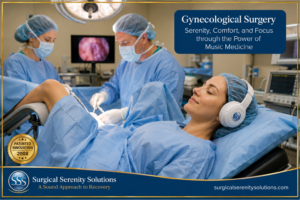 Recently I became aware of QID 477 multimodal pain management (also known as MS-DRG 744). It

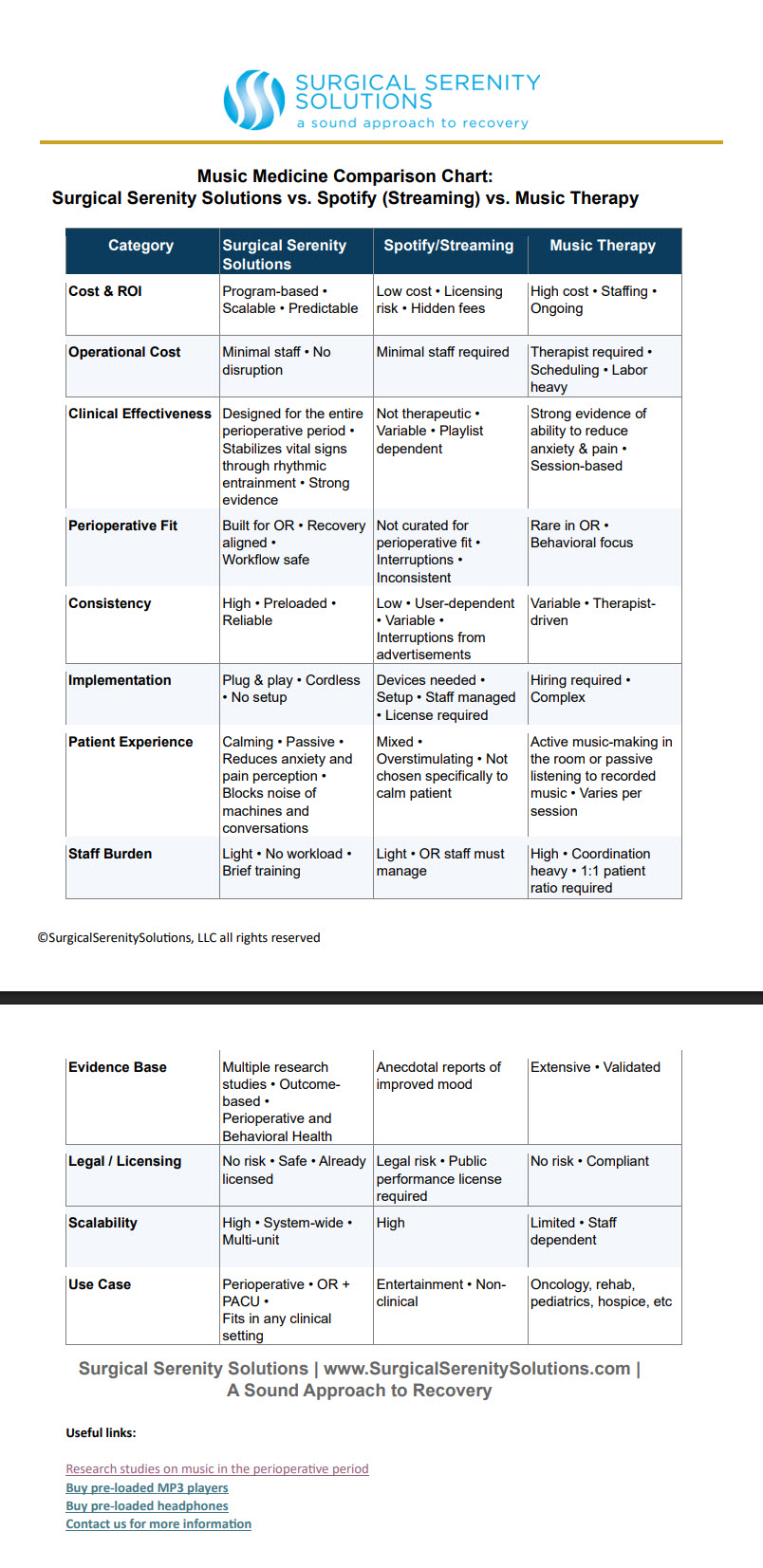


 Music with surgery and in the perioperative period has been around for a while now. Binaural beats have also been around for a long time. NOW, we have added binaural beats to one of our existing playlists.
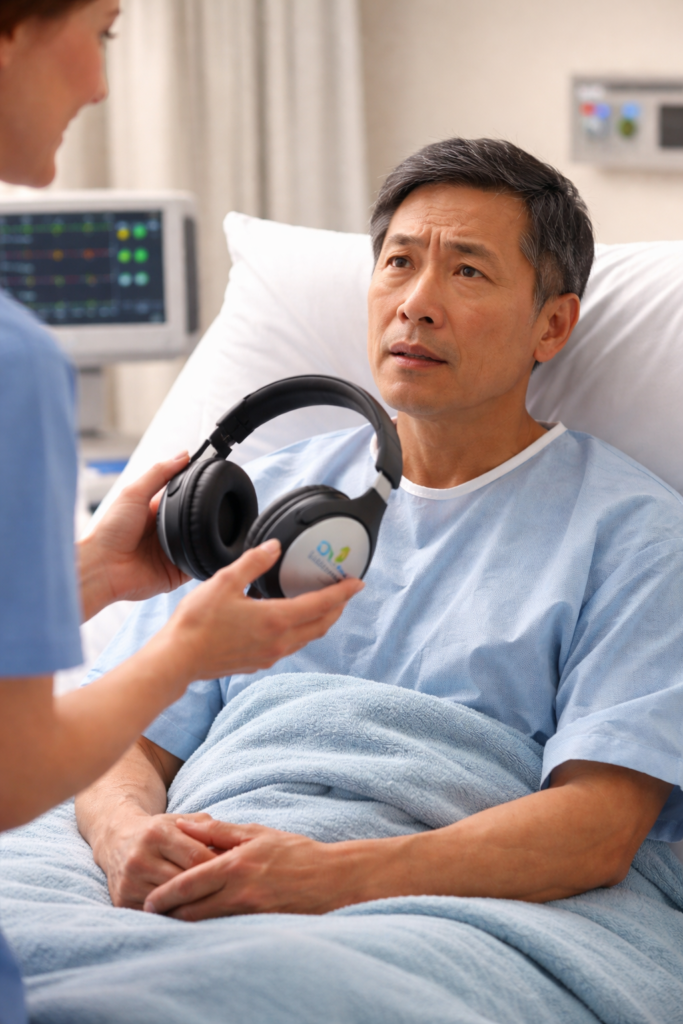
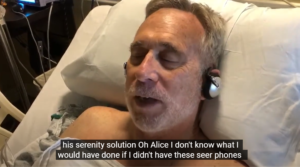 As alway, the headphones are placed on the patient’s head during the preoperative period, after the patient has changed into the surgical gown and had the IV placed. I have seen this happen many, many times and as soon as headphones go on, the patient closes their eyes and exhales a huge sigh of relief, as the soothing therapeutic music begins to wash over them.



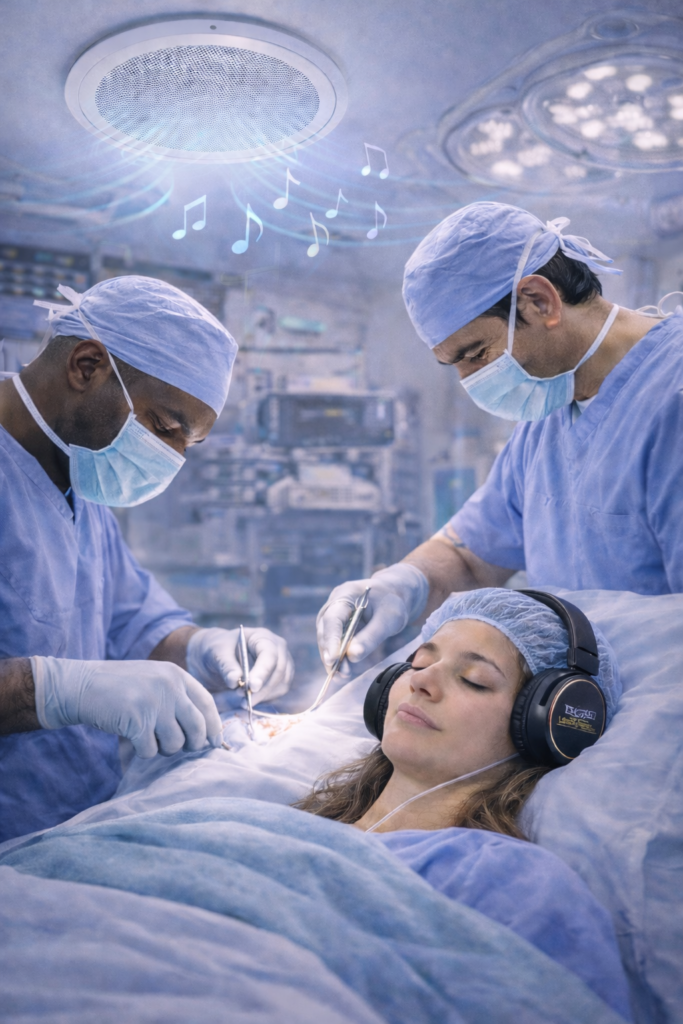
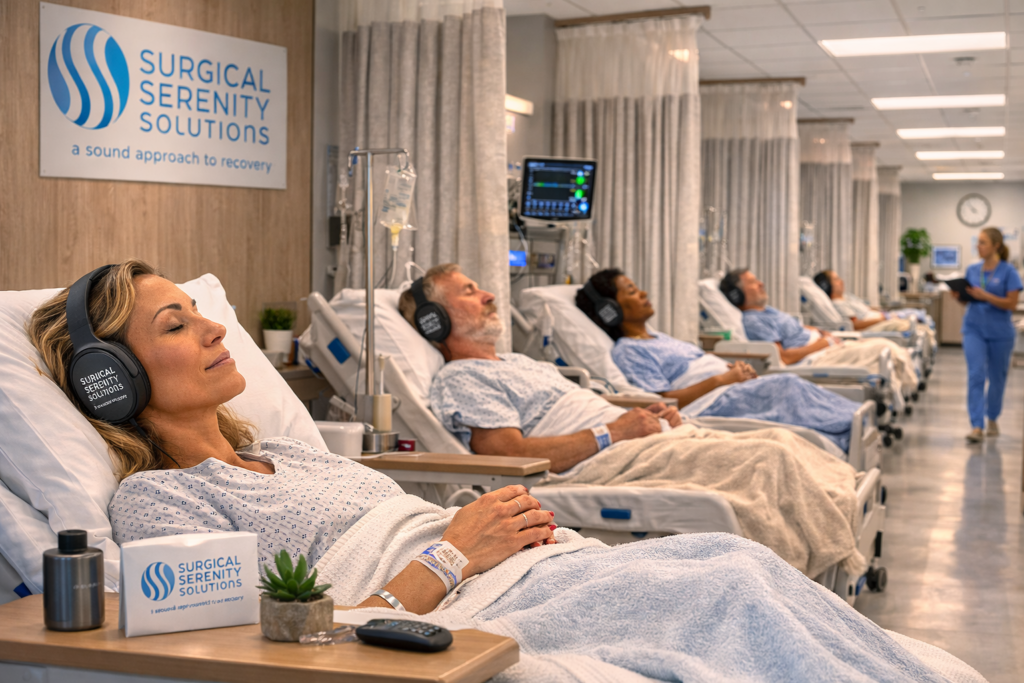


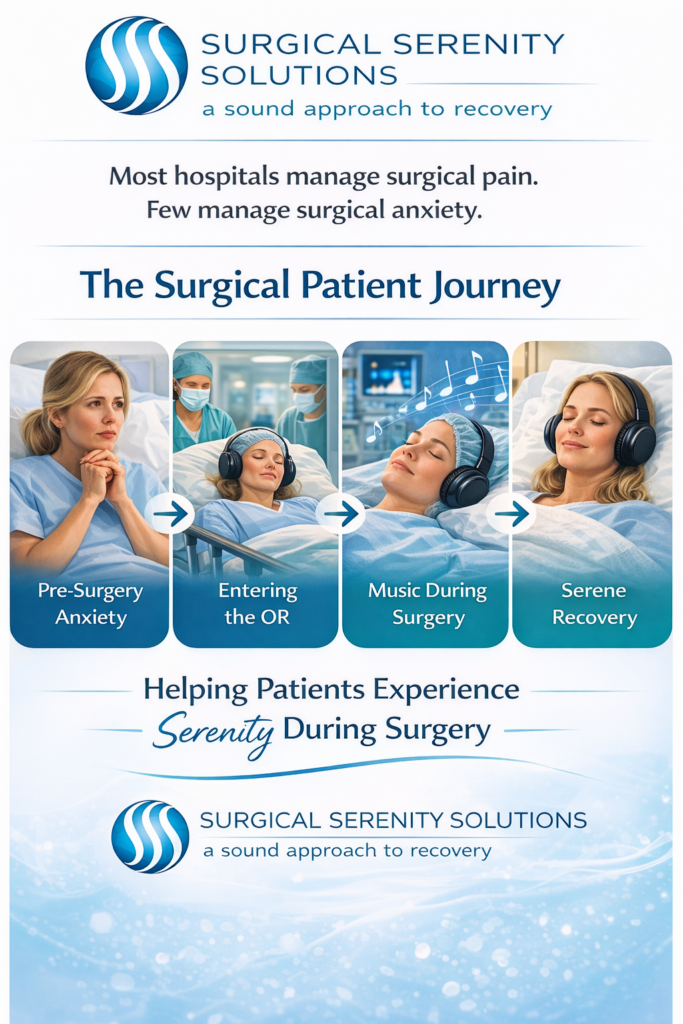 When Surgical Serenity Solutions started a few decades ago, the idea was to provide soothing music to the patient who is very anxious. But around that same time, surgeons were beginning to choose music for themselves to play during surgery. There was a widespread myth that patients under anesthesia would NOT hear the surgeon’s music and therefore surgeon’s could choose whatever they wanted, including such “gems” as “Another One Bites the Dust” by Queen.


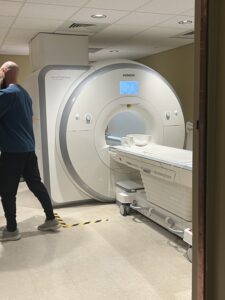 But then, the next afternoon, I was told that I needed a different MRI that would take about 40-50 minutes. Unfortunately, this time, the music was not enough to keep me from suddenly experiencing a miserable attack of claustrophobia. By then, I had been in the hospital over a day with continuous tests and blood drawn and my back and leg were really hurting, in addition to my blood pressure rising more and more depite lots of hydralazine. Another factor I now understand was that the MRI tech did not break the different segments down for me like the others had done. It helps so much when they say “ok, now you’re going to have 7 minutes of this particular sound” and after 7 minutes they actually check in with me and ask how I’m doing. Assuming I’m OK, then they’ll say “now you’re going to have 6 minutes of this specific sound.” That helps me a lot, but this technician just went directly from one sound to the next with no conversation with me.
 I finally did go for an outpatient MRI of head and neck about two weeks later and they gave me an Ativan to calm me before hand. In that case, I fell asleep repeatedly in the machine and there was too much artifact for them to see what they needed to see.