
Binaural Beats in Surgery?







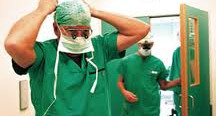 Music with surgery and in the perioperative period has been around for a while now. Binaural beats have also been around for a long time. NOW, we have added binaural beats to one of our existing playlists.
At the request of one of our Ambulatory Surgery Centers, our sound engineer added binaural beats to the Smooth Jazz playlist. The results have been great! Although the sound of binaural beats (always through headphones) is barely perceptible to not perceptible to the conscious ear, the effect is there and the patients having joint replacements (in this case) are loving it!
What ARE binaural beats? Of course there are many ways to describe them, but one of my favorite definitions comes from : https://thehumancondition.com/binaural-beats/
“Listening to two different tones, one in each ear, causes the brain to create an auditory illusion of a third tone resembling “one tone that fluctuates in frequency or loudness: a beat.”1 This extra tone is referred to as a “binaural beat” and is registered by the brain as the difference between the two tones. However, for this to occur, each tone must have a frequency of less than 1,000 Hz, with no more than a 30 Hz difference between the two tones, and both tones must enter the ears simultaneously.2
For example, a tone at 300 Hz heard in the right ear and one at 318 Hz in the left ear will cause the brain to interpret a binaural beat of 18 Hz. The brain will begin to match this in a process called “frequency following response.” Binaural beats may impact “brain activity, behavior, and mood” 2 and can help individuals to achieve a desired mental state.”
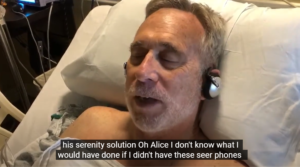 As alway, the headphones are placed on the patient’s head during the preoperative period, after the patient has changed into the surgical gown and had the IV placed. I have seen this happen many, many times and as soon as headphones go on, the patient closes their eyes and exhales a huge sigh of relief, as the soothing therapeutic music begins to wash over them.
Is this as good as or better than using Valium, Xanax, or Ativan? I believe that it is much better because these aforementioned benzodiazepines have addictive potential and when the patient is already going to get anesthesia and pain medication, why not eliminate it from the pre-op period? Addiction is a big problem in our society and people who never did a drug recreationally can take anxiety or pain medication after a surgery and become addicted. Remember, addiction is a disease in itself and if other factors are already there, addiction becomes a way to self-medicate and it gets worse and worse, sometimes slowly, sometimes quickly.
Adding binaural beats to the Jazz playlist has been positive step forward.
When a hospital or ASC (ambulatory surgery center) order headphones, MP3 players, or licenses the app, getting the Jazz playlist with binaural beats is an option. When you order the Hospital Starter Kit, you will get 12 preloaded headphones and you can choose which or the playlists you want, a mix, or all one playlist. Each headphone contains one hour-long playlist that repeats continuously though the surgery.
To learn more about the Hospital Starter Kit, click on the link and you can either buy immediately, fill out our form to ask more questions, or set up a call or a Zoom!
Give your patients a safe and enjoyable way to go into surgery and avoid the potential problems that can come with other medications. The devices are worn throughout the perioperative period and the patient DOES respond to the steady pulse of our music (through the process of rhythmic entrainment) even when under general anesthesia. (a frequently asked question).
Check it out now! Hospital Starter Kit.