About DrAlice

Dr. Alice Cash is one of the world’s few clinical musicologists. Based in Louisville, Kentucky, USA, she brings to her work over 40 years of professional experience as a college professor, clinical therapist, solo and chamber music performer and composer. Since 1990, Dr. Cash has been in the field of Music Medicine and conducted clinical research at the University of Louisville School of Medicine, under the guidance of Dr. Joel Elkes, Dr. Leah Dickstein, and Dr. Rif El-Mallakh. Her clinical work at the University of Louisville lead to her career in music medicine. In addition to her work with the University of Louisville, Dr. Cash lead the development of using music a hospital setting at Baptist East Hospital, Louisvile, KY. She has founded 3 companies: Healing Music Enterprises, Surgical Serenity Solutions and Crescent Hill Counseling.
"Tune Your Life with Music!"

Surgery with Music: What’s New in 2014


FacebooktwitterpinterestlinkedinmailFacebooktwitterpinterestlinkedinmail

It’s really exciting to see so many advances in surgery on the horizon, and although I don’t wish surgery on anyone, it definitely will be happening all day, every day, around the world.  What I am most interested in is seeing that everyone has the best possible chance for a positive outcome!

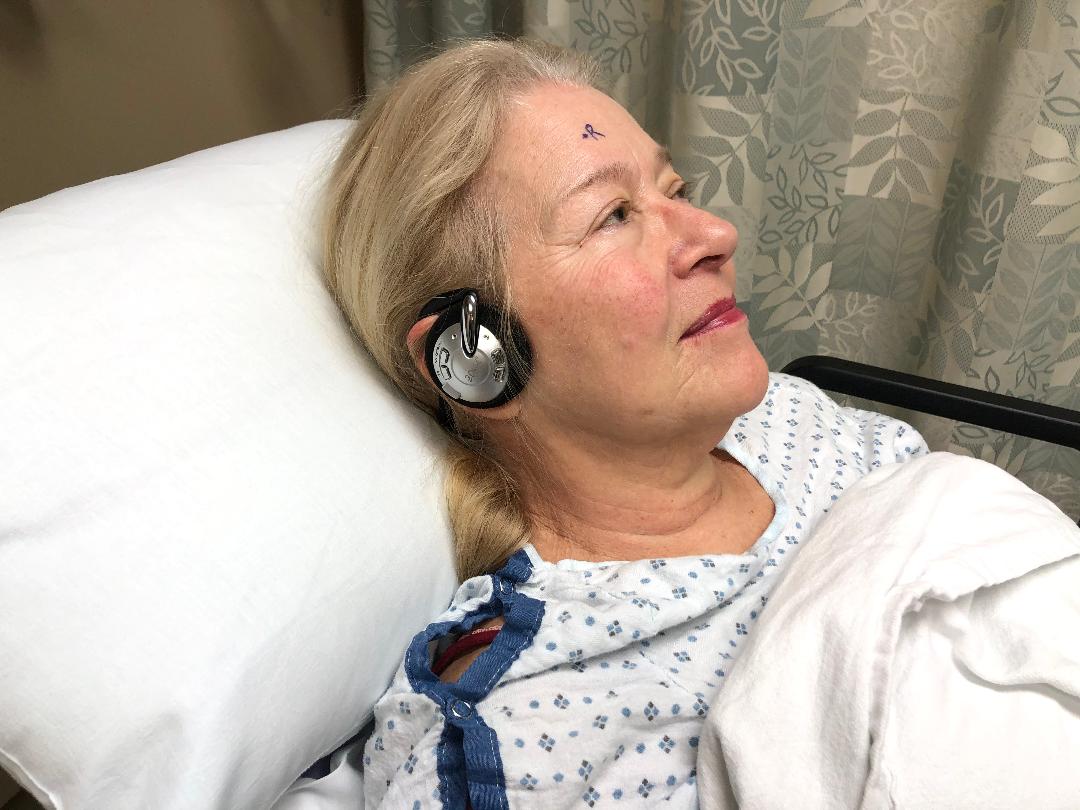
Many astute and perceptive surgeons and anesthesiologists have realized for a long time that music is a powerful and effective addition to the surgical suite, but most were not sure how best to implement this idea.  The idea of using lightweight, behind the neck headphones for the patient, while allowing ambient music delivery for the surgeon, is an ideal solution that will be seen more and more in 2014.

Some other new developments in general surgery include:

  • Intraoperative radiation therapy for newly diagnosed breast cancer (December 2013)
  • Tumor seeding following endoscopic ultrasound-guided fine-needle aspiration of pancreatic tumors
  • Bedside ultrasound prior to skin abscess draining.

Can you imagine how helpful the soothing music headphones could be for patients undergoing any of the above procedures.  And, of course, the calmer and more relaxed the patient is, the better the surgeon can do his or her job.  It just makes sense to relax the patient with music before, during and after any surgical procedure with a method that has no side-effects and reduces recovery time as well as nausea and vomiting.

For more information, see www.SurgicalSerenitySolutions.com or email me at DrAlice@surgicalserenitysolutions.com.


FacebooktwitterpinterestlinkedinmailFacebooktwitterpinterestlinkedinmail

Surgical Serenity Solutions featured in local magazine

FacebooktwitterpinterestlinkedinmailFacebooktwitterpinterestlinkedinmail

FullSizeRender (3) Yes, I was thrilled when a local journalist wanted to write an article about Surgical Serenity Solutions.  One of the challenges that we musicians, music therapists, and clinical musicologists have is publicity.  In the past, unless one had a very healthy  marketing and advertising budget, it was just not possible to let the world know what all of the possibilities were for healing with music, how music affects the brain, and the tremendous benefits of music with surgery.  Now, much of that has changed!

With the internet and the world wide web, Surgical Serenity Solutions now has the possibility of electronic magazines (ezines), blogs, Facebook, Twitter and so much more.  All of these are basically free, but there is just a little bit of a learning curve.  Thanks to all of the new “social media” options, millions more people are now aware of the healing power of music.  And this week, out came one more great article about the Surgical Serenity Solution.  http://issuu.com/todayswoman.com/docs/todayswomandecember2013

The only way that we can get our wonderful, pre-programmed headphones into every hospital is to use social media to the max!  Surgical Serenity Solutions not only has a website, but also a blog, a FB page, www.facebook.com/surgicalserenitysolutions , a Twitter account, @music4surgery , a Instagram account, #surgicalserenitysolutions and other websites such as www.SurgicalHeadphones.com.  I do hope you’ll connect with us in as many of these venues as possible!

There is so much to understand about how to use music with your surgery and so much medical research to report on now!  Don’t miss out on this exciting new development in the world of surgery and the world of MusicMedicine.

Would love to get your comments and questions after reading  this!  Thanks!

FacebooktwitterpinterestlinkedinmailFacebooktwitterpinterestlinkedinmail

New research study on the use of music and reassuring words during surgery

FacebooktwitterpinterestlinkedinmailFacebooktwitterpinterestlinkedinmail

Just important might reassuring music or reassuring words be to you during the surgical process?  Quite a bit, according to a study that just came out of Sweden.   Why do people utter words of reassurance?  Why do people like hearing words of reassurance?  When undergoing a medical procedure that is potentially painful, we tend to give our power to the doctor and the medical staff.  If they reassure us that it probably will turn out well, or that the pain will be brief of even not that painful, we like that!

Add some soothing music to the formula and it’s going to be even better!  Check out this new study that verifies that this is really true!  🙂  Enjoy!

“(NewsFix) Women who heard relaxing music and reassuring words during an operation made a much better recovery than those who did not.
Although you are unconscious during surgery, the brain may still be aware – at some level – of what’s going on around you. Researchers at Orebro Medical Center Hospital in Sweden have demonstrated this to dramatic effect. A group of 90 women undergoing hysterectomies were assigned to either relaxing music, reassuring words and music, or the usual sounds of the operating theatre.

Those exposed to music along with the soothing sound of ocean waves – with or without reassuring words – experienced less post-operative pain and fatigue and were able to sit up sooner after surgery than those who did not hear music. They also felt better when they got home. But there were no benefits in terms of length of hospital stay, nausea or bowel function.

Since playing music and saying reassuring words is simple and inexpensive, there’s not reason not to try it out with all surgical patients, say the researchers. At the very least, it would blot out any worrying comments being made by the medical team which might be picked up – at some level – by the patient.”

FacebooktwitterpinterestlinkedinmailFacebooktwitterpinterestlinkedinmail

Case History #8: 51 y.o.woman with hysterectomy

FacebooktwitterpinterestlinkedinmailFacebooktwitterpinterestlinkedinmail

One of the most interesting patients that I worked with was a 51 y.o. woman who was also a music therapist.    She loved music so much but suffered from severe performance anxiety and so she could never play for others and had gone into another helping profession.  However, her love of music was still intense and when she found that she could use the music she loved to help her through surgery, this is what she wanted to do!

She had been suffering from large fibroids, painful  and heavy menstrual periods since her teens and was now being told that she needed a complete hysterectomy so that she would not have to worry about the cervical cancer that had claimed her mother’s life.  Patient was extremely anxious about going under the knife, but believed that being able to listen to music as she went under general anesthesia and being able to wake up to the same gentle, rhythmic music would make it less terrifying for her.

On the day of the surgery, she was listening through her headphones from the moment she arrived at the hospital.  There was a bit of a glitch, she reported, when they finally took her back to be gowned and given an IV.  She said that having the soft, soothing music playing in her ears while they took her vital signs and asked a few last questions of her sister, was so comforting.

The surgery was a complete success and the patient reported that one of the best thing about having music was that it helped to orient her to where she was and what had just happened:  the surgery.  Despite rather bad nausea and vomiting in the ER, patient said that she still felt the music made it so much easier and more tolerable.  Remember, fear is necessarily about logic and even having lots of “head” information.  If you’re scared, you’re scared.  Let the music go in with you and comfort you…all the way!

FacebooktwitterpinterestlinkedinmailFacebooktwitterpinterestlinkedinmail

Redheads and Anesthesia: There is a difference for them!

FacebooktwitterpinterestlinkedinmailFacebooktwitterpinterestlinkedinmail
Redheaded woman

Yes, redheads do require more anesthesia

Anesthesia is a tricky thing.  And now that we have the internet you can literally scare yourself to death reading horror stories online about anesthesia mishaps, people who woke up during surgery or patients who had the wrong body part removed.  And now there’s something new to be concerned with.   Are you a redhead?  Are you about to have general anesthesia?  You may have heard that redheads require more anesthesia and after just a little bit of researching, you’ll find that it’s true!  Why?  Here’s what one researcher has to say:

Dr. Daniel I. Sessler, an anesthesiologist and chairman of the department of outcomes research at the Cleveland Clinic, said he began studying hair color after hearing so many colleagues speculate about redheads requiring more anesthesia.

“The reason we studied redheads in the beginning, it was essentially an urban legend in the anesthesia community saying redheads were difficult to anesthetize,” Dr. Sessler said. “This was so intriguing we went ahead and studied it. Redheads really do require more anesthesia, and by a clinically important amount.”

After publishing research on the topic, Dr. Sessler began hearing from redheads who complained about problems with dental pain and fear about going to the dentist. He said that when someone with red hair is considering a dental or other procedure requiring an anesthetic, they should talk to their doctor about the high probability that they are resistant to anesthetics.

“Because they’re resistant, many redheads have had bad experiences,” Dr. Sessler said. “If they go to the dentist or have a cut sutured, they’ll need more local anesthetic than other people.”

One of my redheaded friends was so relieved to hear this because she says now she won’t feel so bad when she tells the dentist that she can still feel what he is doing to her and yes, that she still does need more novocaine!  Hopefully, this will help many redheads to understand why they need more pain relief.

Which brings me to my next point.  If you are a redhead and need to have surgery ,are you concerned that you will require more anesthesia?  Fears about anesthesia include, being given too much anesthesia and not waking up afterwards; being given too little anesthesia and waking up before surgery is finished; being resistant to anesthesia and waking up enough to feel and hear what is happening but not being able to say anything.  Although all of these scenarios are extremely unlikely, they do happen and merit some careful thought about how to proceed.  Be sure to talk with your physician about your options.

After more research, I understand that it’s not that redheads are more resistant to anesthesia, but that they metabolize it faster and therefore need more anesthesia, analgesics, novocaine, or whatever it might be.  To order these headphones for YOUR hospitals, go to https://www.surgicalserenitysolutions.com/12-pre-loaded-headphones-for-hospitals/

listening to the calming, rhythmic entrainment music prior to surgery

Patient calms down before surgical procedure with music rather than benzodiazepines

Make sure that the patients at YOUR hospital have the very best and latest equipment to get them through their surgery or procedure with as little pain and discomfort as possible.  You can also let your patients know about our mobile app, which has 5 different, hour-long playlists, in 5 different genres, to get them through their procedures!  Just go to www.SurgicalSerenitySolutions.com/calm.

FacebooktwitterpinterestlinkedinmailFacebooktwitterpinterestlinkedinmail

More Benefits for Music with Surgery: HIPAA compliance

FacebooktwitterpinterestlinkedinmailFacebooktwitterpinterestlinkedinmail

Today I was talking with a nurse at a large mid-Western hospital.  They had contacted me about buying our pre-programmed headphones for their surgery patients and I was answering her questions and beginning to understand what their specific needs were.  The nurse told me that they specifically wanted them for pre-surgery, because there were invariably a room full of patients waiting to be taken into surgery and that each was allowed to have two people with them.

Occasionally, the nurse went on, the room is crowded with surgical patients and one of them begins having a problem or an issue of one kind or another.  The nurses congregate at the one nursing station to discuss the patient/issue/medical crisis and all of the other patients and family members can easily hear the conversation!  Of course this is totally against HIPAA compliance with privacy and patient confidentiality.  In other words, one of the main reasons they wanted the Surgical Serenity Headphones was so that patients achieved privacy and sonic “space.”

When we look at benefits, we typically cite

  • reduced anxiety
  • stabilized blood pressure
  • stabilized breathing and oxygenation of blood
  • reduced anesthesia requirements
  • faster recovery for patient
  • less nausea and vomiting after surgery
  • back to work and life faster because of less medication

Now we have a new one:  better HIPAA compliance!  And that is truly a big deal.  I’ve worked at several different hospitals since HIPAA was put into law and I know that the fines for violating HIPAA laws are enormous.  Hospitals can even lose the accreditation is they repeatedly violate HIPAA laws and policies.  Very important!  Take note, hospital administrators!

FacebooktwitterpinterestlinkedinmailFacebooktwitterpinterestlinkedinmail

Fear of Surgery: is it holding you back?

FacebooktwitterpinterestlinkedinmailFacebooktwitterpinterestlinkedinmail

Let me start by saying:  fear of surgery is not unusual!  Nor is it wrong, or silly, or stupid.  Actually, I think that someone who had just been told they need surgery, would be foolish simply to accept that blindly.   I’ve had surgery numerous times, unfortunately, but obviously I survived!

No one wants their body to be cut on! Nobody in their right mind, but sometimes, the doctor needs to go in and repair something, remove something, or perhaps, just improve it.   In that case, you’re going to need to have surgery.

I’m a great believer in educating yourself and now that we have Google and Bing and other search engines, you can quickly get lots of quality information on most any subject imaginable.  Many people take the ostrich approach and bury their heads in the sand, thinking that if they can just ignore their physical problem it will go away…but it never does!

What if you could be reassured enough to go ahead and have your surgery done and put it behind you?  Many people neglect their surgery because they are truly afraid that they won’t wake up from anesthesia and will never see family and friends again.  Others fear the pain that will invariably result from cutting into the body.  But did you know, that when music is put into your brain, through headphones, anesthesia and pain medication can sometimes be cut in half!!  Yes, this is what research in the fields of music therapy, nursing, surgery and music medicine have shown.  Even if you don’t require 50% less anesthesia and pain medication, you will require less of each, and the less medication you require, the more like you will awaken from surgery and get back to your life.

If you’re interested in knowing more about this, go to Surgical Serenity Solutions and begin educating yourself about music with surgery!

FacebooktwitterpinterestlinkedinmailFacebooktwitterpinterestlinkedinmail

Some Side-effects of Anesthesia are Funny??

FacebooktwitterpinterestlinkedinmailFacebooktwitterpinterestlinkedinmail

Are you worried about the side-effects of anesthesia?  Obviously, general anesthesia is a powerful chemical process.  As with any kind of anesthesia or surgery, there are serious risks.  That’s why you want to do some careful research on the hospital you go to and who will do the surgery and the anesthesia.  Some are better that others.

The sad case of Joan Rivers, recently, demonstrated that even the smallest procedure must be carefully planned and executed.  Her procedure was quite routine, but something went wrong and she died after being in a coma for 3 or 4 days.  This is a worst-case scenario, but you need to do your research and understand that likely, you will have pain from the incision and nausea and vomiting, dizziness, and possibly short-term memory loss from the anesthesia.

Then there are the side-effects that are actually humorous!  There has been a story on television for the past two days about a young man who had just begun awakening from anesthesia.  (Yes, he did have red hair, and redheads are known to be more susceptible to the effects of anesthesia than non-redheads!)  It’s a charming story because as the guy is waking up, he looks over and his wife, but doesn’t recognize her.  Apparently this sort of thing has happened to him before because his wife doesn’t seem to be too devastated.  But when he turns a gets a good look at her, things get really funny and his wife couldn’t be happier at what comes out of his mouth!  Enjoy!

FacebooktwitterpinterestlinkedinmailFacebooktwitterpinterestlinkedinmail

Another Study Documents Benefits of Music with Surgery

FacebooktwitterpinterestlinkedinmailFacebooktwitterpinterestlinkedinmail

Are you, or someone you love, having surgery sometime soon?  You’ve probably heard about people using music during their surgery. Perhaps you’ve wondered what that’s all about?  I did, and was very curious about how that worked and whether or not the doctor would allow it or whether the patient could even hear the music, once they were asleep.

Recently I came across another article about this in the Huffington Post!  It’s not a medical journal, I know, but the research it cites is from a medical journal in England.  Enjoy!


   Listening to music eases stress of surgery


FacebooktwitterpinterestlinkedinmailFacebooktwitterpinterestlinkedinmail

Reactions to anesthesia during surgery

FacebooktwitterpinterestlinkedinmailFacebooktwitterpinterestlinkedinmail

Yes, occasionally people do react adversely to anesthesia during a surgical or medical procedure.  If you’ve been healthy all of your life and never needed to take anesthesia or pain medication, how would you know?

I just heard a dear lady on TV say that she almost lost her husband to an anesthesia reaction, when the surgery was over and he was in the recovery area.  She was sitting beside him and just noticed that he was getting white as a sheet.  She called the doctors and his blood pressure was dropping rapidly.  If she had not observed this, he might have died.

How could music possibly make a difference?   I’ll tell you!  In the scientific research into how music affects the body, we learn about the process of entrainment.  Entrainment is a scientifically documented phenomenon wherein the  pulse of the music synchronizes the body rhythms, (heart rate and breathing) to the pulse of the music.  When the patient is hearing slow, steady soothing music before, during and after his procedure, there is a very good chance that his heart rate, breathing and blood pressure will stabilize and the patient will require less anesthesia and pain medication to stay comfortable.

Research in music therapy, nursing, anesthesiology and other fields is documenting this all over the world.  There are a few hospitals that actually have music therapists playing live music for the patient.  If this is not an option for you, please check out the pre-programmed, Surgical Serenity Headphones and Music.  They are already in use at Mayo Clinic, Cleveland Clinic and VA hospitals.  Let me know if I can help you!

FacebooktwitterpinterestlinkedinmailFacebooktwitterpinterestlinkedinmail
Go to Top