About DrAlice

Dr. Alice Cash is one of the world’s few clinical musicologists. Based in Louisville, Kentucky, USA, she brings to her work over 40 years of professional experience as a college professor, clinical therapist, solo and chamber music performer and composer. Since 1990, Dr. Cash has been in the field of Music Medicine and conducted clinical research at the University of Louisville School of Medicine, under the guidance of Dr. Joel Elkes, Dr. Leah Dickstein, and Dr. Rif El-Mallakh. Her clinical work at the University of Louisville lead to her career in music medicine. In addition to her work with the University of Louisville, Dr. Cash lead the development of using music a hospital setting at Baptist East Hospital, Louisvile, KY. She has founded 3 companies: Healing Music Enterprises, Surgical Serenity Solutions and Crescent Hill Counseling.
"Tune Your Life with Music!"

Will your hospital have music headphones for you?


FacebooktwitterpinterestlinkedinmailFacebooktwitterpinterestlinkedinmail
patient waits for surgery with headphones on

Young male patient listening to music pre-surgery

Having surgery is always stressful, but everyone knows now that music can make a big difference.  Will your hospital have music headphones for you? This is a question that I get asked frequently and so I have a few suggestions as you prepare for your surgery.

Let me start by saying that more hospitals than ever have adopted our Surgical Serenity Solutions headphones.  Still, there is a good chance that your hospital will not have music headphones for you. The good news is that research continues to be conducted and published that show the overwhelming positive benefits of patients have music before, during and after their surgical procedures or hospital-based diagnostic tests.  This also applies to the procedures conducted in Ambulatory Surgical Centers. And if your hospital does not have music headphones for you, you can buy them directly from us and have them shipped in a matter of days.
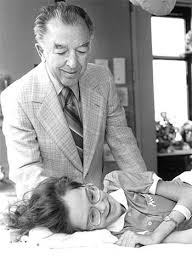
Dr and patient talk

Dr Leatherman was one of the first physicians in Louisville to use music in the operating room.

The first step is to talk with your surgeon or anesthesiologist about your desire to use music with your procedure

Today, the vast majority of surgeons and anesthesiologists have seen the research on the benefits of music with surgery and are in favor of the patient having music. But they have not had the opportunity to learn about the one company (so far) that has created headphones that are pre-loaded with soothing, steady, serene, and therapeutic music. Our music has been curated and sequenced by a clinical musicologist, and our process has received a U.S. patent and many accolades.

But doctors are busy and they don’t realize that a ready-to-go product exists. For this reason, I have written a brief white paper for the patient called “How to Talk with your Doctor about using music with surgery.”  To download this report, go to www.SurgicalSerenitySolutions.com/Talk2Dr. The report provides your doctor with research and dialogue between the patient and doctor in language that the doctor needs to hear in order to be positively persuaded.

The second step is to order your own pre-loaded headphones if the hospital doesn’t have them

When I first started this business, pre-loaded headphones for surgery didn’t exist.  By chance, one of our first customers was a physician in our city of Louisville, KY who was having a hip replacement and ordered them . To my great delight, she wrote me a personal letter afterwards saying what a positive experience it had been and assuring me that she would spread the word to her colleagues and patients. This was a great start for our business.

The third step is to read some of the research yourself so that you can speak with confidence on the subject

Dozens of powerful, persuasive research studies have been conducted on the use of music before, during and after surgery.  One of the most impressive and conclusive was a meta-analysis that was published in the British journal The Lancet.  Read this study here.

Hospitals have a vested interest in keeping patient satisfaction high
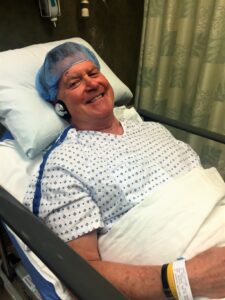
Have you noticed that when you go to the hospital for any reason, or even the doctors office nowadays, you’ll get a survey? Yes, medical professionals truly care that you have a positive experience at their hospital, surgery center, or private practice, but their reimbursement is also tied to positive patient ratings. Patients who have music headphones provided to them in the hospital tend to give higher patient satisfaction ratings. They know  that their hospital is going above and beyond the call of duty to give them the best experience possible. And if they’ve had surgery in the past, they can definitely feel the difference between having a “sonic cocoon” created for them of beautiful, relaxing music and have a anxiety-filled pre-surgery period where nurses and techs are talking with patients all around you and you are separated from other patients only by a curtain.

Many patients have reported that just hearing other patients conversing with staff and their own family members made then more frightened than they were when they arrived at the hospital.  Having these pre-loaded headphones blocks all of that out and puts the patient in their own “sonic cocoon.”  This is true both before, during and after the procedure.  The recovery area is also filled with patients just waking up from surgery and separated only by a curtain.

We are looking for organizations to sponsor a take-home headphone for each surgery patient to use during their recuperation. Don’t you think that’s a great idea??  Leave a comment if you have any connections with any of the health-related non-profits or even a company that wants to be known for supporting patients.

Think about and talk with your surgeon about your desire to use music during your procedure and how they hospital or YOU can make this happen!  Best wishes for a successful procedure!  And do let me know if you have any questions. Click below to get a quote for your hospital!

https://www.surgicalserenitysolutions.com/hospitalheadphones

FacebooktwitterpinterestlinkedinmailFacebooktwitterpinterestlinkedinmail

Would you like your local hospital to offer music through headphones for surgery?

FacebooktwitterpinterestlinkedinmailFacebooktwitterpinterestlinkedinmail

OLYMPUS DIGITAL CAMERA

Would you like for your local hospital to offer music through headphones for surgery? I’ve been working in this field for over 25 years now and I think the answer is a resounding “YES!”  Patients who go to the hospital or Ambulatory Care Center for a colonoscopy, a joint replacement surgery or cataract surgery, definitely want to be a comfortable and pain-free as possible.

For decades now, doctors, hospitals, and medical researchers have been conducting studies that show beyond the shadow of a doubt that music is powerful and positive in its ability to decrease anxiety, pain perception, and therefore, medication reduction.  But right now, the hospitals that are offering music therapy are doing so only when music therapists are available to provide live music and create a relationship with that patient.

Music therapists are awesome and do amazing work, but there is not nearly enough to go around. You might say that music therapists are the “gold standard” but when a patient is anxious, fearful, and possibly in pain, Music Medicine is the go-to!  And what exactly is Music Medicine, you ask?  Music Medicine is an intervention that is offered by any caregiver when they provide soothing music that the patient can entrain with, through cordless headphones or earbuds.  It is so easy and effective that every hospital on the planet could be doing this right now with very little expense.

For years I have been offering pre-loaded, cordless headphones on my website, Surgical Serenity Solutions, and now I am also offering just the powerful proprietary music that I have put together over the past 25 years.  To purchase one of our playlists, go to the Apple App Store on your smartphone or tablet and listen to the samples, then choose the playlists you like best.

This music has been studied and tested by anesthesiologists and surgeons in Louisville, KY and they published a study that you can read HERE. This study found that patients who were listening to the this music through cordless headphones, experienced 20% less pain perception than those who did not listen to music through headphones. We were so excited, but not surprised.

We’re looking for organizations that would like to sponsor headphones for patients to take home. Examples would be children recovering from surgery, cancer patients taking chemo, etc.

In addition, I am creating a consulting option for hospitals that want to understand how THEY can get music working for their patients in their hospital.

All five playlists will be available for licensing at a very reasonable price.


FacebooktwitterpinterestlinkedinmailFacebooktwitterpinterestlinkedinmail

Headphones for surgery, headphones for MRI

FacebooktwitterpinterestlinkedinmailFacebooktwitterpinterestlinkedinmail

Just as I think I know all there is to know about hospital headphones, something new appears!! Since the late 1990’s my focus has been on headphones that are specifically intended to be used before, during and after surgery. I started with headphones for surgery because of a personal experience with surgery in the mid-1990’s.
As time went on, doctors and patients were frequently proposing so many other used for my pre-loaded headphones. Dentistry, chemotherapy, hospice patients were a few of those.

Many people asked if our pre-loaded headphones  could be used in an MRI machine and the answer has always been “no” because there is a tiny bit of metal in them and that would not be allowed. MRI standsSo for “Magnetic Resonance Imaging” and the machine has a giant magnet in it. When the buzzing the clanging start (depending on what part of your body has a problem) the vibrating of your bones and organs produces a clear image of that body part. This allow the physician to understand exactly what is going on in the body. Brilliant idea!

But because our headphones have that tiny bit of metal in them, they can’t be used in the MRI machine because it would interfere.

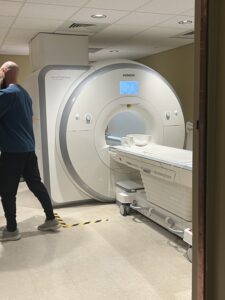
So, last Wednesday I had to have an MRI and I was prepared to have them play music through speakers in the MRI machine. That’s what I’ve had in the past and it’s OK when the beeping and buzzing and clanging aren’t going on, but when they are, it’s impossible to hear the music. When they asked me if I’d like headphones I was flabbergasted! And the headphones that you see in the picture are what they gave me.

MRI machineThe machine was made by the Siemens company, and the headphones plug into a place at the foot of the MRI machine. They have absolutely no metal in them and the music comes through an airtube.  For me, the headphones were a little tight, but I guess they were trying to make them as noise cancelling as possible. The quality of the music they played, Pandora, the MRI tech said, was not good and sounded to me kind of like AM radio. There was even talking at one point which sort of broke whatever relaxation feel I might have had. Anyway, it was still an interesting and educational experience for me.

When I created the Surgical Serenity headphones, I specifically wanted cordless headphones because in surgery, there are so many cords that the anesthesiologist usually has to manage.  This way, the headphones are completely away from the surgical procedure that’s going on and our music doesn’t interfere with anything. But in an MRI machine, there are no other people around and the patient is lying in an enclosed space so the air tube doesn’t interfere with anything.

So, lesson learned. Other people have thought about using music in other medical procedures and I’m happy about that. Now, if they can think about the fact that people who composed the music that Pandora uses need to get paid too. For that to happen, hospitals and medical facilities need to purchase a healthcare facility license and not just use a personal Pandora subscription.

I don’t have any direct connection yet with these MRI headphone manufacturers but if you do please let me know in the comments because I’d love to talk to them about using my scientifically validated, therapeutic music.

To get Surgical Serenity headphones for YOUR hospital, go to www.surgicalserenitysolutions.com/hospitalheadphones.


FacebooktwitterpinterestlinkedinmailFacebooktwitterpinterestlinkedinmail

Surgical Playlists in the Operating Room: headphones or speakers?

FacebooktwitterpinterestlinkedinmailFacebooktwitterpinterestlinkedinmail
Elderly patient wearing headphones after surgery

Woman relaxed wearing headphones before surgery

This is an exciting era in the field of Music Medicine and Music Therapy! Researchers are actively conducting studies and numerous clinical trials are underway in hospitals across the globe. While patients have always recognized the calming and healing effects of music, scientists now seek solid data to support this phenomenon.

The Age-Old Healing Power of Music

Throughout history, music has been a cherished and time-tested means to soothe both the mind and body. Its therapeutic potential is undeniable, but in today’s world, empirical evidence is crucial to substantiate music as a legitimate therapeutic modality. Anecdotal accounts, though valuable, fall short of meeting the rigorous demands of scientific scrutiny.

In order to make a well-researched decision about giving a patient personal, pre-loaded headphones, or music through speakers in the room,

You need to know:

  1. What kind of music patients need
  2. For how long they need this music
  3. How the music should be delivered, i.e. through headphones or speakers in the room

The questions that I deal with frequently are:

  1.  Why should I have my own music that I chose, through headphones when the surgeon has already chosen the music he thinks is best?
  2.  Why can’t I choose the music that I want to hear during my surgery?
  3.  Why is it so important to have preloaded headphones?

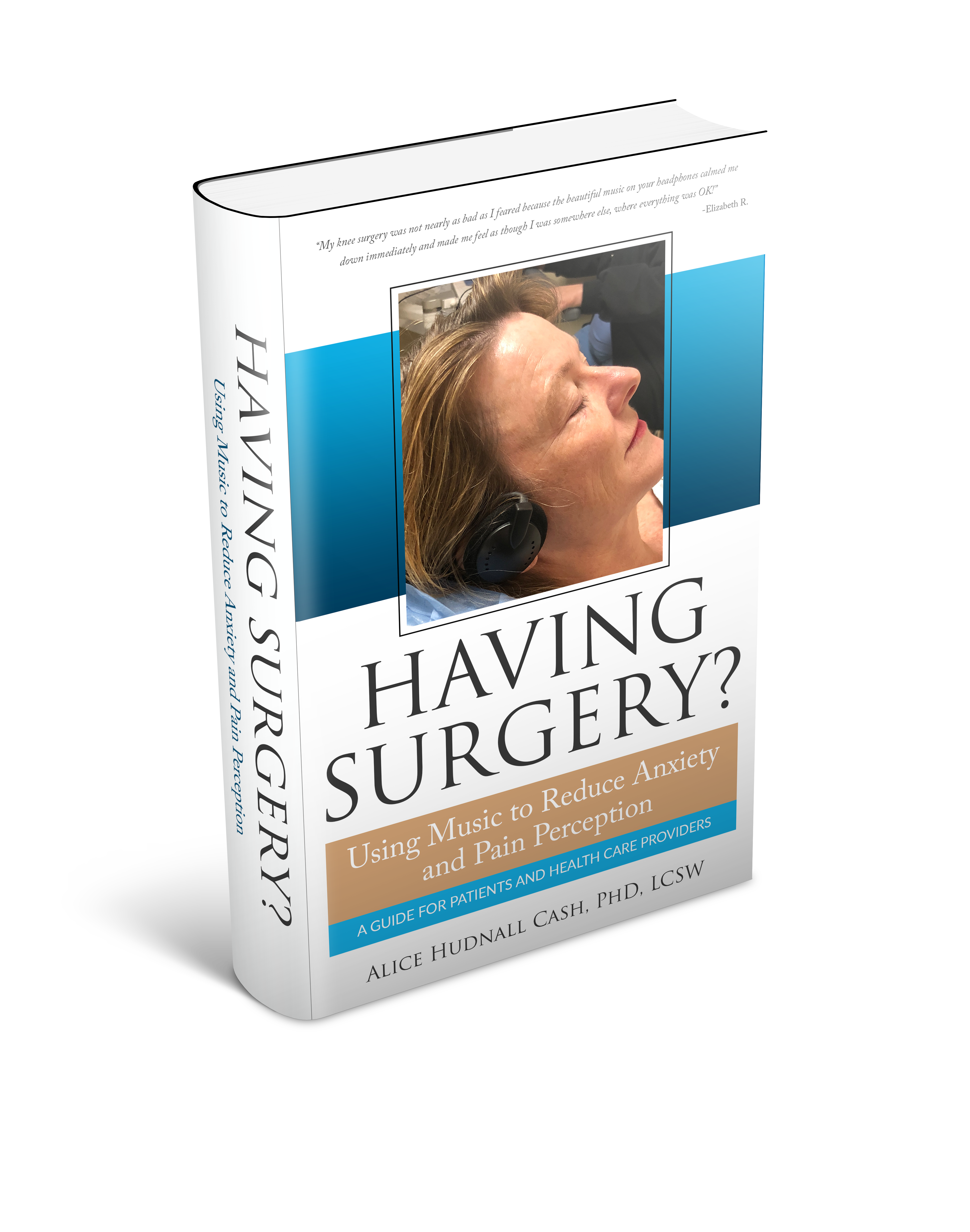
Having Surgery? book

In 2019 I wrote a book specifically to answer these questions.  You can find it on Amazon.com in paperback or Kindle format. I also answer many of these questions on my YouTube channel. (While you’re visiting my YouTube channel, please subscribe!)

Recently a study came out showing the many benefits of music with heart surgery. Anxiety reduction was the primarily goal and the study demonstrated a significant benefit to the patients.

Read the study here.


https://studyfinds.org/music-medicine-pain-anxiety-heart-surgery/

Much of the information online today shows a patient wearing headphones. Although the patient on the left is wearing headphones that have a cord, we provide headphones that are cordless and are pre-loaded with the soothing, therapeutic playlist of YOUR choice. We understand now that individual headphones for patients are important. The personal headphones with therapeutic music create a sonic cocoon that music through speakers in a large room cannot provide.

For surgery, especially, the patient needs to be protected from conversations that slip into the subconscious and create unnecessary anxiety. So many patients report that, even under anesthesia, they hear the medical team talk about potentially negative outcomes of the surgery, or worse yet, conversations that were not related to the patient or  surgery at all!

If you’re ready to order our headphones for YOUR hospital, go to www.surgicalserenitysolutions.com/hospitalheadphones.


FacebooktwitterpinterestlinkedinmailFacebooktwitterpinterestlinkedinmail

The importance of reviews to a company like Surgical Serenity Solutions

FacebooktwitterpinterestlinkedinmailFacebooktwitterpinterestlinkedinmail

If you are a hospital administrator or president of a medical/medical device company, you know how important reviews are! I certainly rely on product reviews, physician reviews, and reviews of service providers.

When I first created Surgical Serenity Solutions back in 2005, (known then as Healing Music Enterprises) the internet was still pretty new and internet marketing was really just getting started for small businesses. We were mainly just focused on getting our messages out and in our case, we were trying to scour the internet for medical and surgical research that had focused on the use of music as an analgesic and an anxiolytic agent.

We were also educating medical professionals about the difference between music therapy and music medicine because most people thought the terms were interchangeable. We were trying to get our U.S. Patent approved and jumping through lots of hoops to prove that our headphones were safe in a surgical setting.  All of these things were accomplished by 2009.

Then we began hearing about the importance of patient reviews and physician and hospital reviews so we set out to garner some of those.

To our delight, the positive and even glowing reviews began rolling in, many times without even asking for them! One of our first was from a physician in our city of Louisville, KY who had heard me speak at a local medical meeting and ordered the headphones for her upcoming surgery. Apparently she was concerned that she might get some flack from the surgeon or other OR staff but here’s what she told us:


Sandra Elam, MD at Lifespring Inc.
Dr Alice Cash’s earphones designed for surgery are the highest and best thing you can do for yourself if you are facing surgery. I had had a failed bowel resection (colectomy) , then an ileostomy. I was in no way prepared for those surgeries and they were terrible. Using Dr. Cash’s headphones for the third and reversal surgery was a completely different experience. The surgeon as well as the anesthesiologists were impressed, and said that it made their work easier!! I don’t know why everybody doesn’t wear them into surgery!

This was double powerful for us because Dr. Elam was speaking both as a patient and a physician!

Another patient had the problem of being slow to wake up from anesthesia after surgery. This happens more often than you might think, especially among those who are either elderly or have multiple serious health conditions. Here is was Mary Jo told us:

“In August 2014 I had gall bladder surgery. I was apprehensive since I was so slow to come out of the anesthesia during past surgeries. I never saw the inside of the recovery rooms. It took so long they just moved me on to the post-op room. I used the Surgical Serenity headphones for a couple of weeks prior to the surgery, plus before and during the surgery and recovery. Prior to the surgery, my blood pressure was lower than normal and I woke up in the recovery room for the first time ever! I highly recommend these headphones to anyone preparing to have surgery!”

FacebooktwitterpinterestlinkedinmailFacebooktwitterpinterestlinkedinmail

Adolescents in the Pediatric ICU: Music therapy and hand massage

FacebooktwitterpinterestlinkedinmailFacebooktwitterpinterestlinkedinmail
Adolescents are prone to anxiety under the best of circumstances.  It’s a time a life that’s full of changes, some expected, some unexpected! Having to be in a pediatric ICU is definitely unexpected and the anxiety levels there are sky-high!
So I was particularly happy to see this new research study appear online this morning in my email entitled:

Impact of music therapy and hand massage in the pediatric intensive care unit on pain, fear and stress: Randomized controlled trial

In this empirical study, conducted in Turkey, the adolescents were divided into three groups.
  • a music group of 33 patients
  • a hand massage group of 33 patients
  • a control group of 33 patients that received the standard care

The study does not reveal what the music intervention was, but reports at the end that “Nurses may use music therapy and hand massage to manage fear and pain related to blood drawing in the PICU.”

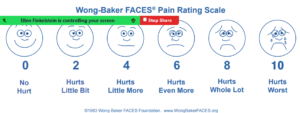
The results were that both the music group and the hand massage group had lower pain and fear score results, based on the FACES pain scale

Pain scale for adolescents

as well as a a pain scale called the Children’s Fear scale. The researchers also looked at blood cortisol levels. (Cortisol is a hormone. produced by the adrenal glands and found in the blood when people are under great stress.)

Here is a link to the study if you’d like to read more about it: https://pubmed.ncbi.nlm.nih.gov/37230011/

I am grateful that these studies exist but it would be so helpful if the researchers would let us know the type of music they used and how it was delivered. As a colleague of mine said recently, it’s like saying “the researchers gave the patient medicine,” but not say what the medicine was or how much they gave or how often!

They also state that the “music therapy” can be delivered by nurses!  Unless the nurse is also a music therapist, this is not possible. HOWEVER, the nurse can definitely deliver music medicine through pre-loaded headphones with therapeutic music chosen by a clinical musicologist.

To read more about this, go to www.SurgicalSerenitySolutions.com/patient-products. 


FacebooktwitterpinterestlinkedinmailFacebooktwitterpinterestlinkedinmail

How anesthesiologists discovered the value of music with Surgical Serenity Solutions headphones

FacebooktwitterpinterestlinkedinmailFacebooktwitterpinterestlinkedinmail
healthy resting heartbeat entrains to music through headphones

Patient enjoying serene music that entrains with healthy resting heartbeat

When I first had the idea to create preloaded headphones for surgical patients, it was because I had gone through a surgical procedure that terrified me. I was told that I needed to have back surgery for a ruptured disk. After 40+ years of sitting at the piano for 4-5 hours a day to practice, I would then sit in a chair teaching piano for 4-5 hours a day.

People have to have surgery for many different reasons but when they are told they need surgery, fear and anxiety are almost always the feelings they experience first. As a professional musician and lover of music, I thought that if patients could be handed a headphone with soothing, calming, comforting music on it, as soon as they arrive at the hospital, this could really make a difference.

As I began to research the idea, I learned that the patient’s anxiety causes their muscles to tense up, all over the body, and some of the initial medication given to the patient at the hospital is to begin to relax those muscles. The more relaxed your muscles are when you’re wheeled into the operating room, the less anesthesia it will take to sedate you, and the less pain medication (opioids) it will take to keep you comfortable during the procedure!

Dr Cash speaks to hospitals and surgeons around the world!I was focused exclusively on the patient at first, but then I realized that I really did need the “buy-in” or confirmation that this was a good idea from the anesthesiologist and surgeon. At the time, I was working a the University of Louisville School of Medicine, so finding surgeons and anesthesiologists to dialogue with was not difficult.

Here is an excerpt from one anesthesiologist who also is a professional violinist:

“As an anesthesiologist with an extensive background in classical music, I am a strong proponent of Dr. Cash’s proprietary, rhythmic entrainment focused music, pre-loaded on cordless headphones.

Rarely, if ever, in medicine is there an intervention that has repeatedly demonstrated efficacy in multiple studies that also carries with it virtually no risk to the patient.

As a physician, I am always weighing the risks and benefits of each treatment to determine if it’s worth utilizing. Surgical Serenity Headphones are unique in that they carry immense benefits without any downside.

 I am always pleased to accommodate a patient’s wishes to bring music into the operating room. I would be particularly enthusiastic if they had these pre-programmed cordless headphones that would maximize the physiologic benefits through rhythmic entrainment.

 I recommend talking to your surgeon as soon as possible in the process, and certainly mention your desire to bring headphones in on the day of surgery to the anesthesia team. This would best be accomplished if you have a pre-op appointment with someone from anesthesia, but not everyone will have this chance. This could also happen during a pre-op phone call.

Whenever it happens, try to be prepared to assuage any concerns or skepticism with the fact that these headphones, and music in general, have been and are currently being used in operating rooms across the planet, including many world-renowned medical centers.”

One of the first reports that I wrote for patients was called “How to Talk with your  Doctor about Using music during surgery.” In the beginning, patients were concerned (and rightly so!) that their doctor wouldn’t let them bring their headphones from home into surgery.

I learned quickly that hospitals around the country have very different policies from each other and that while some hospitals and doctors are totally OK with this concept, depending on what the specific surgery is, other hospitals totally forbid “anything from home” coming into the OR.

patient listens to soothing jazz while waiting for cataract surgeryNow, music in the operating room is more expected than not.  But what patients nor doctors still realize is that the patient DOES respond to music that is playing nearby, even when they are under general anesthesia!  Yes!  The patient may not consciously HEAR the music, but their body does respond to the rhythm of the music by entraining to it…the patient’s own heartbeat and breathing TENDS to sync with the tempo of music playing in the room.  That is why the music for the patient needs to be different from the music that surgeon has chosen!

Surgical Serenity Solutions has created the solution for this dilemma! Our pre-loaded headphones put the ideal slow, soothing music directly into the patient’s ears with playlists in 5 different genres.  And the doctor can still have his or her music playing ambiently to help them maintain their energy and focus. To read more about our headphones, which can be ordered by patients or hospitals, go to www.SurgicalSerenitySolutions.com.

FacebooktwitterpinterestlinkedinmailFacebooktwitterpinterestlinkedinmail

Emergency surgery for a retinal tear

FacebooktwitterpinterestlinkedinmailFacebooktwitterpinterestlinkedinmail
after the cataract surgery

Surgery with the use of Surgical Serenity music throughout

Recently a dear friend went to his ophthalmologist because of a problem with his left eye and a sudden gray fog that appeared.  He was really not expecting it to be a big deal, but when the Dr finally got a good look, he said “you need emergency surgery! you have a retinal tear (torn retina).” This was 9:30 in the morning and he finally found an available retinal surgeon that afternoon at 5 PM. What an ordeal!!

No one knows what causes a retinal tear, or a detached retina, or a macular hole, but when these things happen, it’s an emergency and our feelings and emotions start working overtime. Life is full of unexpected twists and turns, but taking pills and liquids is not the only solution.  Healing music is!!  Of course the  therapeutic music is not going to “cure” anything, but the right music can definitely ameliorate the symptoms by calming the body and reducing anxiety and pain perception.

Our surgical headphones have been accompanying patients into surgery since 2009 and we are now the biggest producer of surgical headphones in the world. You can read and view some of our patient testimonials at www.SurgicalSerenitySolutions.com/testimonials. Our soothing, therapeutic music makes SUCH a difference that patients and physicians are usually quite surprised.

This is not just any relaxing music.  We have specifically tested and chosen music in 5 distinct genres that begins to calm and soothe the patient as soon as they put on our lightweight, cordless headphones. Dr. Cash is a concert pianist, a clinical social worker, and a clinical musicologist with 33 years experience in the medical field.

Our music is played on acoustic instruments (except for the New Age playlist) and performed by professionals, dedicated to our mission of providing therapeutic music for surgical patients to ease their anxiety and their pain perception.

If your hospital is ready to step into the future and provide their patients with a cutting-edge product, click this link now. Surgical Headphones 

Our headphones will be prepared and shipped to you within 30 days and you can buy them online, send a purchase order, or write a check!

Give your patients the gift of soothing, therapeutic music and the likelihood of less medication and a faster recovery! Surgical Headphones 

FacebooktwitterpinterestlinkedinmailFacebooktwitterpinterestlinkedinmail

Are medical procedures traumatic for you?

FacebooktwitterpinterestlinkedinmailFacebooktwitterpinterestlinkedinmail

As a psychotherapist and a clinical musicologist, patients tell me on a regular basis that they are filled with anxiety about upcoming medical procedures. Anything from an injection or blood draw, to major or minor surgery seems to evoke a level of fear that is significant. You don’t have to have a car crash, or near-death experience to perceive trauma in an upcoming procedure.

And remember, trauma is in the heart and mind of the person having the procedure.

I must admit that I get pretty worked up myself over procedures large and small, medical and dental. Recently I had to have some thyroid nodules biopsied and I was very anxious about the potential pain.  This is one of the many procedures that a local numbing injection is all that they can give you and of course, this one is right in the neck. After 20 minutes, the doctor came in and gave me 8 more needles in the same area!  Seems cruel but that’s the only way to sample and test the nodules.

As it turned out, it wasn’t nearly as bad as I had feared and all of the nodules were benign. But the places my mind went were scary and things could have turned out much differently.

So what do YOU do when you know you’re going to have to have a scary medical procedure or a big dental procedure, or even surgery?  There are SO many medical and nursing research studies that document the powerful calming and sedative benefits of music. Not just ANY music though. Some people (even Doctors and nurses) think that something fun and upbeat will be just the ticket.  Others believe that relaxation music, i.e. nature sounds or binaural beats, (slightly different frequencies played separately in each ear) will do the trick.

Instead, through my own readings, and verified through my research, I have discovered my proprietary, patented  system of music that effectively reduces anxiety and pain perception. The principles I use can be applied to any genre of music and I created five playlists in five different genres so that the patient can choose their favorite.

Patients who used this system needed less anxiety medication, they needed less anesthesia (which means they wake up sooner and easier) and less pain medication afterwards. Pain medication in particular can be a problem because patients can get addicted to opioids.  It’s not a moral issue at all.  When people are in pain, and pain is very subjective, all they want is to be out of pain.  Opioids will do this, but if you take them longer than 5-7 days, it is possible to build up a tolerance and then the problem starts.

Using music before, during and after your procedure will decrease the need for AS MUCH anxiety medication (xanax, valium), anesthesia (propofol, etc–the one that killed Michael Jackson), and pain medication afterwards (opioids). On my website, you can ready many of the best recent research studies about the power of music with surgery and other medical procedures. www.surgicalserenitysolutions.com/research.

One of the main reasons I created Surgical Serenity Solutions was for myself. I do not like pain but I do LOVE music. When I discovered how well-documented this intervention was, I tried to find a simple way to provide music for all patients who are fearful of upcoming procedures. After trying several other methods, I came up with the idea of putting the ideal music (I am also a clinical musicologist) on cordless  headphones that would not interfere in any way with the surgical team or dental staff. Since 2009, we have continuously improved the delivery method and added four new genres of playlists.

The patient can now purchase the preloaded headphones or the hospital can purchase them in bulk and have them waiting for the patient! Our 5 playlists (Classical, Jazz, New Age, Lullabies, or Memory Care) can be streamed to bluetooth headphones that patient or hospital already owns, or the patient can bring their own AirPods and stream from their cellphone or an iPad already in the operating room.

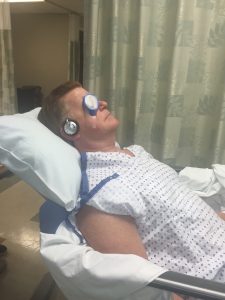
This patient is waiting to go into surgery. and is feeling no pain!  He’s waiting to have a cataract removed and is listing to the Jazz playlist.  When it was all over, he reported “that was such an amazing experience, have easy but steady jazz music playing while the surgeon went about her business and I heard none of it. I will take these headphones to every medical and dental procedure I ever go to!”

Do you want this for yourself or for your hospital and patients.  ORDER NOW!! Go to www.SurgicalSerenitySolutions.com/hospitalheadphones or

www.surgicalserenitysolutions.com/patientheadphones.

P.S. These headphones contain no metal so they are safe in hospital or surgical settings that don’t allow any metal! 🙂

Get YOURS today!

FacebooktwitterpinterestlinkedinmailFacebooktwitterpinterestlinkedinmail

During surgery, what do staff talk about in the OR?

FacebooktwitterpinterestlinkedinmailFacebooktwitterpinterestlinkedinmail
Cataract Surgery with Bluetooth headphones and Surgical Serenity Lullaby playlist

Dr Cash’s cataract surgery using Bluetooth headphones and Surgical Serenity playlist

I read a very interesting post yesterday. A nurse who worked in surgery 30-40 years ago said that during whatever procedure the surgeon was doing, he was talking to the patient the entire time. Even though the patient was under general anesthesia, the surgeon addressed him as Mr. ____ and explained everything he was doing, as he was doing it. He also added positive comments such as “the operation is going very well,” “you’re going to recover quickly and easily from this,” and “you will feel so much better for having had this procedure.”

He did not allow any OR chatter among the staff or talk about the patient as though he couldn’t hear them. I wonder how often this happens today, around the world?

Apparently this is not the norm today. The OR chatter is filled with topics that have nothing to do with the patient and sometimes the patient is talked about in a demeaning way. Now I don’t think that’s the norm, but it does happen and there have been lawsuits about this in the news recently.

Having surgery is a very frightening experience for many people. Just recently I was told that I need to have a biopsy on my thyroid and I am truly not looking forward to that! But surgeries, biopsies, and testing of all kinds are daily occurrences around the world.  Modern medicine has created many, many procedures that involve probing into the body to eliminate, destroy, or treat illness.

While this is going on, the patient benefits from being as calm as possible!  I actually love the idea of the doctor talking to the patient throughout the procedure, especially if it’s calm, positive talk.  I have heard from so many patients that even under general anesthesia, or perhaps as they were waking up, they heard OR staff discussing their lunch or dinner plans, their date the night before, or topics totally unrelated to their surgery or procedure. That does NOT feel good.  Patients don’t want to feel like their procedure is not that important to the people who are conducting it.

Actually, the turning point for me was when I heard that a surgeon in a large downtown hospital here was playing “Another one bites the dust” by QUEEN during most of his surgeries!  I was horrified! That is not funny or cute and is extremely disrespectful. How much kinder, healing, and respectful is addressing the patient directly with words that calm, soothe, and encourage the patient to begin healing. Think about it.

In the meantime, if  is not your practice to talk to the patient that you’re operating on, you should know that research shows that when patients listen to soothing music through headphones, they recover better and with less PONV. Get your patients the Surgical Serenity Solutions preloaded headphones, with soothing, slow and completely instrumental music. They will definitely thank you for this!

FacebooktwitterpinterestlinkedinmailFacebooktwitterpinterestlinkedinmail
Go to Top