

Would you like your local hospital to offer music through headphones for surgery?







OLYMPUS DIGITAL CAMERA
Would you like for your local hospital to offer music through headphones for surgery? I’ve been working in this field for over 25 years now and I think the answer is a resounding “YES!” Patients who go to the hospital or Ambulatory Care Center for a colonoscopy, a joint replacement surgery or cataract surgery, definitely want to be a comfortable and pain-free as possible.
For decades now, doctors, hospitals, and medical researchers have been conducting studies that show beyond the shadow of a doubt that music is powerful and positive in its ability to decrease anxiety, pain perception, and therefore, medication reduction. But right now, the hospitals that are offering music therapy are doing so only when music therapists are available to provide live music and create a relationship with that patient.
Music therapists are awesome and do amazing work, but there is not nearly enough to go around. You might say that music therapists are the “gold standard” but when a patient is anxious, fearful, and possibly in pain, Music Medicine is the go-to! And what exactly is Music Medicine, you ask? Music Medicine is an intervention that is offered by any caregiver when they provide soothing music that the patient can entrain with, through cordless headphones or earbuds. It is so easy and effective that every hospital on the planet could be doing this right now with very little expense.
For years I have been offering pre-loaded, cordless headphones on my website, Surgical Serenity Solutions, and now I am also offering just the powerful proprietary music that I have put together over the past 25 years. To purchase one of our playlists, go to the Apple App Store on your smartphone or tablet and listen to the samples, then choose the playlists you like best.
This music has been studied and tested by anesthesiologists and surgeons in Louisville, KY and they published a study that you can read HERE. This study found that patients who were listening to the this music through cordless headphones, experienced 20% less pain perception than those who did not listen to music through headphones. We were so excited, but not surprised.
We’re looking for organizations that would like to sponsor headphones for patients to take home. Examples would be children recovering from surgery, cancer patients taking chemo, etc.
In addition, I am creating a consulting option for hospitals that want to understand how THEY can get music working for their patients in their hospital.
All five playlists will be available for licensing at a very reasonable price.


 Just as I think I know all there is to know about hospital headphones, something new appears!! Since the late 1990’s my focus has been on headphones that are specifically intended to be used before, during and after surgery. I started with headphones for surgery because of a personal experience with surgery in the mid-1990’s.
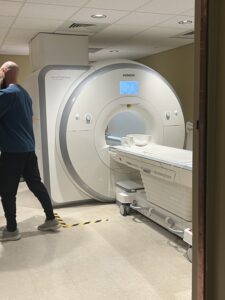 The machine was made by the Siemens company, and the headphones plug into a place at the foot of the MRI machine. They have absolutely no metal in them and the music comes through an airtube. For me, the headphones were a little tight, but I guess they were trying to make them as noise cancelling as possible. The quality of the music they played, Pandora, the MRI tech said, was not good and sounded to me kind of like AM radio. There was even talking at one point which sort of broke whatever relaxation feel I might have had. Anyway, it was still an interesting and educational experience for me.


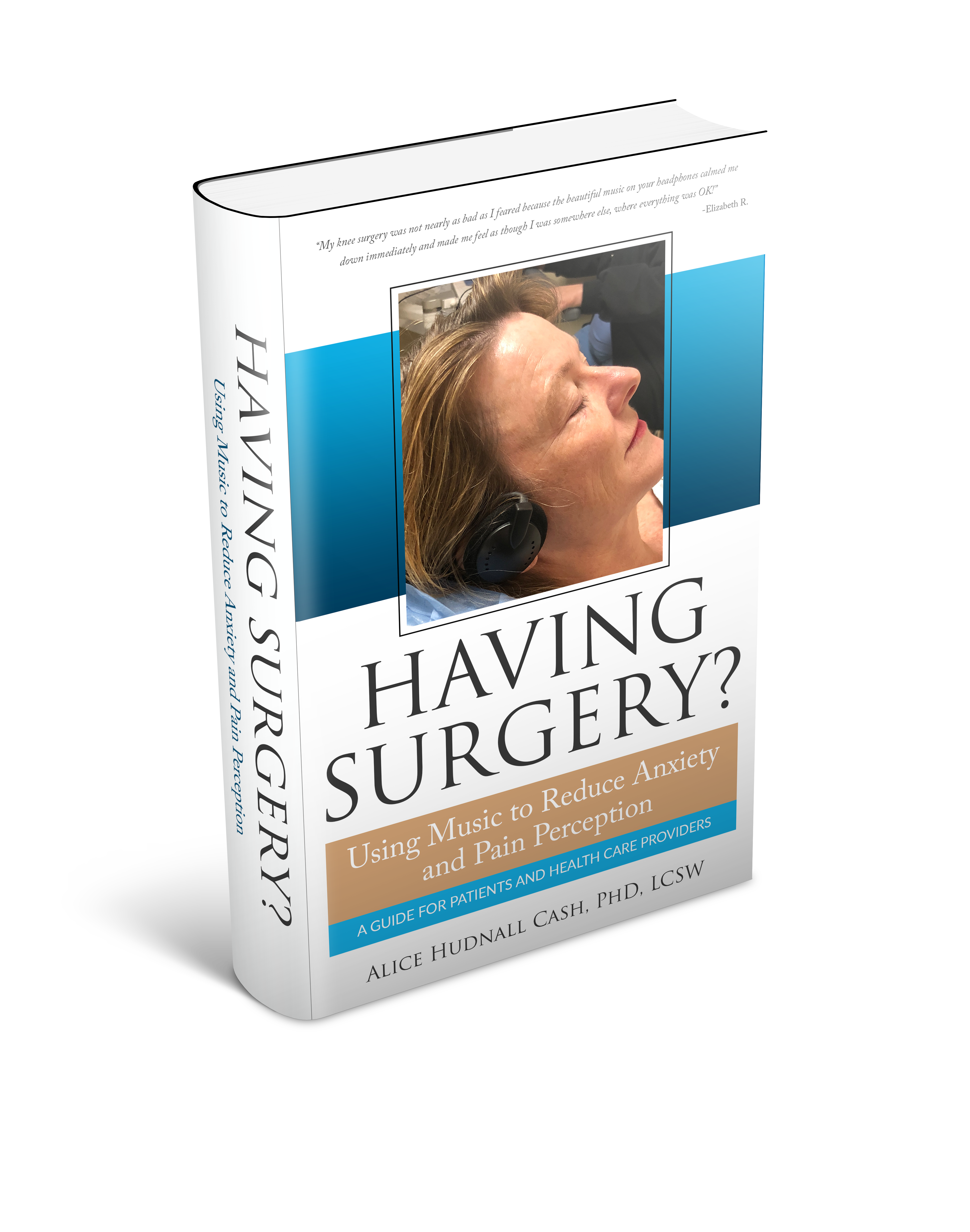
 https://studyfinds.org/music-medicine-pain-anxiety-heart-surgery/




 I was focused exclusively on the patient at first, but then I realized that I really did need the “buy-in” or confirmation that this was a good idea from the anesthesiologist and surgeon. At the time, I was working a the University of Louisville School of Medicine, so finding surgeons and anesthesiologists to dialogue with was not difficult.
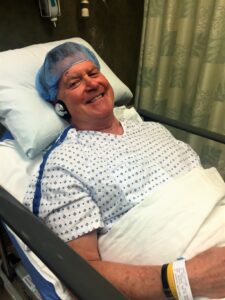 Now, music in the operating room is more expected than not. But what patients nor doctors still realize is that the patient DOES respond to music that is playing nearby, even when they are under general anesthesia! Yes! The patient may not consciously HEAR the music, but their body does respond to the rhythm of the music by entraining to it…the patient’s own heartbeat and breathing TENDS to sync with the tempo of music playing in the room. That is why the music for the patient needs to be different from the music that surgeon has chosen!

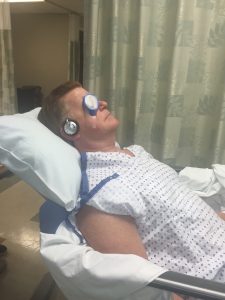
 This is not just any relaxing music. We have specifically tested and chosen music in 5 distinct genres that begins to calm and soothe the patient as soon as they put on our lightweight, cordless headphones. Dr. Cash is a concert pianist, a clinical social worker, and a clinical musicologist with 33 years experience in the medical field.

 So what do YOU do when you know you’re going to have to have a scary medical procedure or a big dental procedure, or even surgery? There are SO many medical and nursing research studies that document the powerful calming and sedative benefits of music. Not just ANY music though. Some people (even Doctors and nurses) think that something fun and upbeat will be just the ticket. Others believe that relaxation music, i.e. nature sounds or binaural beats, (slightly different frequencies played separately in each ear) will do the trick.


