About DrAlice

Dr. Alice Cash is one of the world’s few clinical musicologists. Based in Louisville, Kentucky, USA, she brings to her work over 40 years of professional experience as a college professor, clinical therapist, solo and chamber music performer and composer. Since 1990, Dr. Cash has been in the field of Music Medicine and conducted clinical research at the University of Louisville School of Medicine, under the guidance of Dr. Joel Elkes, Dr. Leah Dickstein, and Dr. Rif El-Mallakh. Her clinical work at the University of Louisville lead to her career in music medicine. In addition to her work with the University of Louisville, Dr. Cash lead the development of using music a hospital setting at Baptist East Hospital, Louisvile, KY. She has founded 3 companies: Healing Music Enterprises, Surgical Serenity Solutions and Crescent Hill Counseling.
"Tune Your Life with Music!"

Surgery with Music Series Post #25: Music with Eye Surgery


FacebooktwitterpinterestlinkedinmailFacebooktwitterpinterestlinkedinmail

In the 20 years that I have been working with surgery patients, helping them choose their perfect music to relax them and assist them through their procedure with a minimum of drugs, I have yet to find a procedure that music can’t help.

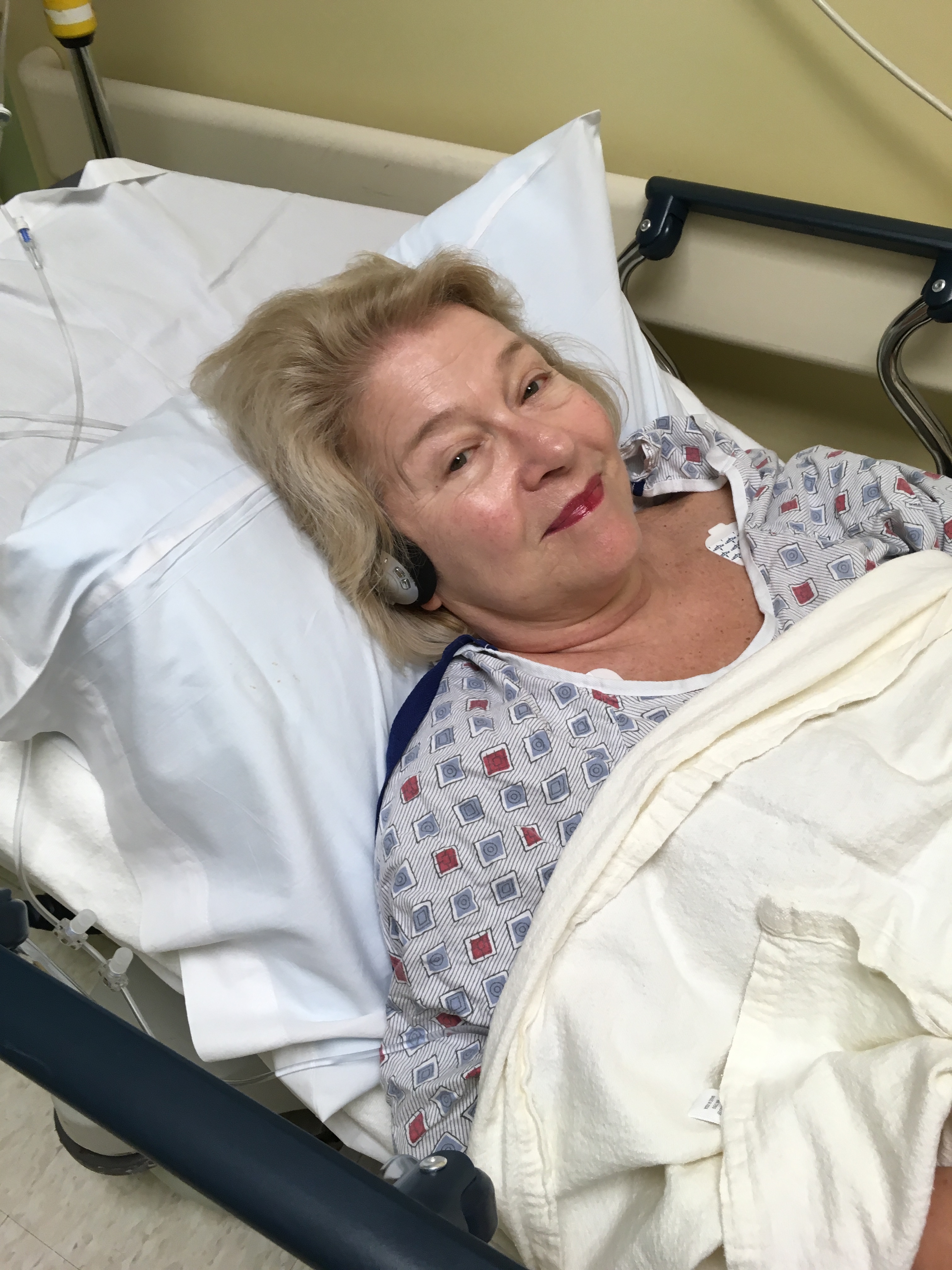
This dear lady came to me because she was in the midst of a series of eye surgeries to treat her macular degeneration and her glaucoma. She had already had two of the three surgeries and had to do it with only a local anesthesia. She had emerged from the first two with splitting migraines and a body so stiff and tense she could hardly move for the next several days.

She was feeling somewhat desperate and when she heard about the headphones she was more than ready to try anything! Listen to her story and let her tell you what a positive experience she had:

If you have an eye surgery in your future, you might want to seriously consider giving the headphones a try. The research is there, the experience is there. Music can greatly enhance and improve your surgical experience!

FacebooktwitterpinterestlinkedinmailFacebooktwitterpinterestlinkedinmail

Surgery with Music Series Post #24: Surgery Headphones in the Hospital with Pacemaker Implantation

FacebooktwitterpinterestlinkedinmailFacebooktwitterpinterestlinkedinmail

 
Surgery is by no means the only valuable use for Surgery Serenity Headphones.  As a matter of fact, most any procedure that is done in a hospital or doctor’s office could help ease a patient’s anxiety, soothe their fears and decrease the amoung of anesthesia that might be needed.

One of the first patients that used the headphones in the hospital was a man who had a pacemaker implanted.  Listen to his story and keep music in mind if you or anyone you know needs to have a pacemaker put in.  Although the music is already pre-programmed into the headphones, you can easily put your on favorite music on these headphones if you wish!

FacebooktwitterpinterestlinkedinmailFacebooktwitterpinterestlinkedinmail

Surgery with Music Series Post #23: Entrainment in Surgery

FacebooktwitterpinterestlinkedinmailFacebooktwitterpinterestlinkedinmail
Entrainment and Surgery

Drs. Friedman and Cash at CCF

 To put it as simply as possible, entrainment in surgery is all about synchronizing.  The slow, steady tempo of the music entrains with the patient’s heartbeat and breathing.  Mostly we hear about rhythmic entrainment and brainwave entrainment.  When talking about music during surgery, both of the these types of entrainment are tapped.  The power of this during surgery comes from the slow, steady pulse of the music coming through the headphones.  In this instance, the synchronization begins when the patient can hear the music and feel the relaxation.  As they go into deeper states of “sleep” the vibrations of the slow, steady music keep the heartbeat and breathing entrained or synchronized with the pulse of the music.

The more relaxed the body is during surgery, the less anxiety medication, pain medication and even less anesthesia is required.  The less medication the patient requires,  the safer the procedure will be and the faster the patient will recover.  It’s so easy and so logical, that it has been overlooked for many, many decades.  Now people are beginning to understand how entrainment works and tap into the power of musical entrainment.

Rhythmic entrainment is a core principle of music therapy.  Many years ago I was introduced to the concepts of music therapy and began to realize that this was so powerful and yet so simple.  It’s the same phenomenon that makes people clap their hands to music, or sway gently, tap their toes or fingers.  When listening to many kinds of music, the urge to entrain is almost irresistible!  For many years I thought about all of the many ways the power of rhythmic entrainment might be harnessed for medical benefits.  When I finally decided to create a surgical playlist that would induce this phenomenon, I knew that I had come up with an idea that could really make a big contribution to health and healing.

Will you be next?

FacebooktwitterpinterestlinkedinmailFacebooktwitterpinterestlinkedinmail

Surgery with Music Series Post #22: Can anyone benefit from music during surgery?

FacebooktwitterpinterestlinkedinmailFacebooktwitterpinterestlinkedinmail
Surgical Serenity w colonoscopy

Surgery with music

Can anyone benefit from surgery with music?  Well, do you love music?  Does it relax you, comfort you, make you feel safe and secure?  Are there lots and lots of songs and pieces that remind you of happy times and all of the people you love?  If you answered “yes” to any of these questions, there is an excellent chance that you would benefit from music during your procedure.   Before and after your procedure, I think it’s a great idea to listen to the music that is especially meaningful to you.  During your surgery, whether you’re using a regional anesthesia or general anesthesia, research shows that purely instrumental music that has a slow, steady beat and a soothing, calming mood is best.

Ideally, everyone would be able to create their own playlist for their surgery, but that’s not very realistic.  Most people are a little bit rattled when they find out that they need surgery and sitting down to choose their favorite music and loading it methodically onto their Ipod is just not going to happen.  Then too, many older people wouldn’t know how to put music on an iPod anyway.

In addition, unless you have a brand-new iPod, your’s is likely pretty germy and not something that you want to bring into the operating room.

This is why I decided to create some pre-programmed, cordless headphones that would have the perfect, slow, steady, soothing music for surgery.  The headphones are lightweight and have no cord so that they can’t get tangled with any medical equipment.  The music was chosen by a clinical musicologist who has studied this for over 20 years.  If you have been told that you need surgery and if you love music and would like to experience the many benefits of music during surgery, click HERE.  If you have any questions, please don’t hestitate to contact me through this blog.

FacebooktwitterpinterestlinkedinmailFacebooktwitterpinterestlinkedinmail

Surgery with Music Series Post #21: Is there scientific research on benefits of music with surgery?

FacebooktwitterpinterestlinkedinmailFacebooktwitterpinterestlinkedinmail

Another great question that was sent in by a reader.  The short answer is “YES.”  There is so much research on the use of music before and after surgery that I can not list all the studies here.  You may remember that I spoke at the Cleveland Clinic Florida about recent research in music with surgery and there I had chosen the most recent 15 or so studies from over the past decade.

The highlights of this research can be found HERE.  You will see that studies have been done not only at well-known institutions such as Yale University, but also from around the world.  Most of the studies focus on music before and after surgery, but increasingly, research is now being conducted on music during surgery.  Currently out surgery headphones are the focus of a medical study at the VA Hospital here in Louisville, KY and results should be available by the end of this year.

There are so many documented  benefits of music surrounding surgery and other medical procedures.   Do you want to take less anxiety medication before, less anesthesia during, and less pain medication afterwards?  Do you want to recover faster and side-step the effects of so many medications?  Do you want to avoid the “brain fog” that often hangs on for weeks and weeks after surgery?  Then go HERE and order your surgery headphones!

FacebooktwitterpinterestlinkedinmailFacebooktwitterpinterestlinkedinmail

Surgery with Music Series Post #20: How difficult is it to find the pre-programmed headphones for surgery?

FacebooktwitterpinterestlinkedinmailFacebooktwitterpinterestlinkedinmail

 If you have just found out that you need surgery for any given condition, you’ll want to get the headphones as soon as possible.  Having the ability to listen to this music for an hour or so a day leading up to the surgery will allow you to condition your body to relax when the music starts. 

It’s also good to be able to let your doctor know that you want to use music during the surgery in case he has questions about doing this.  Although most doctors are fine with the idea once they understand the considerable research behind them, some doctors will balk.  A few people have reported that their doctor allowed them to wear the headphones until the surgery and immediately afterwards, but not during. 

If you are going to a large, cutting-edge facility, it’s possible that they will already have the headphones ready to go for you, but in smaller communities and hospitals, you’ll probably have to bring your own!  As I said above, though, just be sure to let the doctor you’ll be bringing in your own music and player.

The only surgery that the headphones might not work for would be brain surgery and even then they could possibly be worn.  Anything new always has many skeptics at first, but these surgical serenity headphones are rapidly gaining credibility in the medical world.  I think the fact that the Cleveland Clinic has brought be in to do a Grand Rounds presentation is proof enough that they are a great idea!

Even if your surgery is less than a week away, I can probably get them to you if you’re willing to pay overnight postage.  Just go to www.surgicalheadphones.com and you can order either the headphones or a download of my proprietary music, chosen especially for it’s characteristics.  You can put the music on your own iPod or MP3 player if you prefer, but the cordless headphones are the easiest and most convenient!  Best wishes on your procedure!

FacebooktwitterpinterestlinkedinmailFacebooktwitterpinterestlinkedinmail

Surgery with Music Series Post #19: How long will music continue to be helpful in recovery process?

FacebooktwitterpinterestlinkedinmailFacebooktwitterpinterestlinkedinmail

 A reader has asked the question about how long after returning home from surgery will the headphones and music continue to help.  Great question!  The wonderful thing about music is that it always relaxes you and healing happens best and fastest when the body is relaxed.  Stress and anxiety cause every muscle in your body to tense up and it’s hard to heal when your body is full of tension.

That’s why putting the headphones on at least 30-45 before you are taken in to surgery is so important.  Here too, the more relaxed your body is, the less anesthesia and pain medication will be required to put you to sleep and keep you asleep comfortably.

After you return home you will find that it’s easy to add new music to the headphones or change all of the music completely.  You’ll be able to wear the headphones outdoors or indoors.  You could even travel with them and wear them on planes, trains and cruise ships, just like you would an iPod, but cordlessly.  These headphones are an investment that you’ll enjoy for years to come.

Thanks for all the questions people are sending me.  Keep them coming!

FacebooktwitterpinterestlinkedinmailFacebooktwitterpinterestlinkedinmail

Surgery with Music Series Post #18: Do any hospitals have headphones waiting for patients?

FacebooktwitterpinterestlinkedinmailFacebooktwitterpinterestlinkedinmail

This is my goal:  that every hospital, clinic and medical center in the world have the Surgical Serenity Headphones or some equivalent waiting and ready for their patients.  The research is there…music before, during and after surgery help the patients in ways that can be measured as well as in ways that can’t be measured.  The picture on the left was taken at the Cleveland Clinic in Florida just a few months ago.  I was flown in to give a Grand Rounds lecture to the entire staff of physicians and residents and they had double the usual crowd there.  Dr. Friedman, Chief of Surgery, said that everyone there is so enthusiastic about this and they hope to start a research study there in the next few months!  They already have some of the headphones that they are using.

The Cleveland Clinic in Ohio is using some right now as is the Mayo Clinic in Rochester, MN.  The VA hospital in Louisville, KY is doing a formal study on our Surgical Serenity Headphones and another hospital in Louisville is using them.  For the most part, they are currently being bought by individuals around the country, in Canada and in Western Europe. 

If you are having surgery soon, they can be shipped overnight to you!  Otherwise they arrive in 3-4 days.  If you are a surgeon, anesthesiologist or hospital staff or administration, please contact me for pricing information.  I want everyone to have these available for their patients and the reviews are excellent.

FacebooktwitterpinterestlinkedinmailFacebooktwitterpinterestlinkedinmail

Surgery with Music Series Post #17: What music should you listen to during surgery?

FacebooktwitterpinterestlinkedinmailFacebooktwitterpinterestlinkedinmail

When you’re about to have surgery, you really don’t have time to think about much else except preparing yourself for that process and the potential outcomes, good or bad.  The only possible exception to that might be cosmetic surgery where you have plenty of lead time and you feel sure that the outcome will be better that what you’re living with right now.

That’s why I think it’s nice to be able to have the music already pre-programmed on the cordless headphones.  Also, to know that the music has been chosen by an expert in music for surgery, so that the tempo, melodies, and character of the music is the ideal for surgery. 

What about the genre of music?  What about classical, jazz, pop, sacred, world music, or just easy listening?  I believe that any genre of music can be healing and can be soothing and comforting in the way that you want for surgery.  The fact is though, if you’re having general anesthesia, you won’t even hear the music once you’re completely under the anesthesia. 

So why have music playing while you’re under general anesthesia?  Good question!  And here is the answer:  the music that has been chosen for your surgery has a very slow, steady pulse that will entrain or synchronize your heart-beat and breathing with the tempo of the music.  This is done vibrationally and makes headphones the ideal way to transmit the vibrations through the 8th cranial nerve in the ear to the brain and throughout the entire body. 

One of the guiding principles of music therapy is that the patient should have the music of their choice, but this is not traditional music therapy because no music therapy is present.  The music has already been chosen and the genre right now is classical.  Eventually we will have jazz, folk, sacred and other genres available but people who don’t typically listen to classical music have listened to this soundtrack and said that it relaxed them quickly and totally. 

It’s all about a safer surgery procedure and a faster recovery.  Check them out at www.surgicalheadphones.com

FacebooktwitterpinterestlinkedinmailFacebooktwitterpinterestlinkedinmail

Surgery with Music Series Post #16: Headphones vs Earbuds

FacebooktwitterpinterestlinkedinmailFacebooktwitterpinterestlinkedinmail

If you’re to be going through surgery of any kind, or dental work, or chemotherapy or kidney dialysis, etc., then you need to understand the benefits of headphones vs earbuds.   Everyone’s ear is a little bit different externally and internally and there is just no one that one size and type of earbud can fit everyone.  On myself, earbuds constantly fall out.  I wore them at the fitness center for years and I was constantly needed to re-insert them because they had fallen out.

With headphones, not only do they gently cover the entire ear, but you can adjust the volume so that you can comfortably and effectively hear the music, but it’s enough to block external conversations that you don’t want to hear.  If the doctor does need to say something to you or ask you a question, he can move in toward you just a little bit and direct a question to you and you can easily hear him!

Not only that, but our headphones are cordless and so there’s nothing to get tangled up with medical or dental equipment!  Earbuds have a cord that hangs down and connects to you iPod or other MP3 music device.  When you weigh the pros and cons of each, I think you’ll want to use headphones.  Let me know your questions?

FacebooktwitterpinterestlinkedinmailFacebooktwitterpinterestlinkedinmail
Go to Top