
What hospitals and doctors know about Surgical Serenity Solutions







“Why didn’t I think of this?”
 Not all doctors and hospitals are thinking about therapeutic music and how it might integrate into their hospitals. Not surprising, right? I’ve been told many times that my only real competitor in business is “the status quo.” “This is the way we’ve always done it.” “if it ain’t broke, don’t fix it.” And finally, “why didn’t I think of this!” But this is NOT how progress is made!
Almost as soon as I had the idea to create preloaded headphones for surgery patients, I also started polling all of the doctors and nurses that I knew to ask if they thought this idea would work and be helpful. To my delight, EVERYONE thought it was a great idea and said things like “I can’t believe someone didn’t do this long ago.” “Such a great idea, hiding in plain sight!”
Of course, one of the reasons that no one had done this is because the technology wasn’t there is 2005. And so, in order to get a patent, I had to have an engineer figure out how to get the music into the headphones. And he did. He made a design that utilized RFID technology and this is what I got a patent on. Almost as soon as I got the patent in 2008, I found a headphone on the market that was programmable! I was so excited and I had already curated my Classical Playlist and was able to put it on this headphone.
Mayo Clinic Cardiac Unit
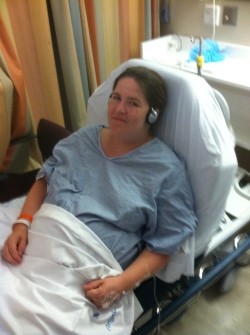 Mayo Clinic in Rochester, MN was my first hospital to use the headphones in their post-cardiac unit and they reported great results! Nurses reported that the patients loved the music and their vital signs stabilized faster and they required less anxiety and pain medication.
At that time, our first clinical study had not yet been published but the nurse said that once it was published, they would definitely be ordering our headphones.
Here’s what one anesthesiologist said:
“…Rarely, if ever, in medicine is there an intervention that has repeatedly demonstrated efficacy in multiple studies that also carries with it virtually no risk to the patient.
As a physician, I am always weighing the risks and benefits of each treatment to determine if it’s worth utilizing. Surgical Serenity Headphones are unique in that they carry immense benefits without any downside.
I am always pleased to accommodate a patient’s wishes to bring music into the operating room. I would be particularly enthusiastic if they had these pre-programmed cordless headphones that would maximize the physiologic benefits through rhythmic entrainment.
I recommend talking to your surgeon as soon as possible in the process, and certainly mention your desire to bring headphones in on the day of surgery to the anesthesia team. This would best be accomplished if you have a pre-op appointment with someone from anesthesia, but not everyone will have this chance. This could also happen during a pre-op phone call.” Thomas Mayo, MD
Cleveland Clinic Surgery
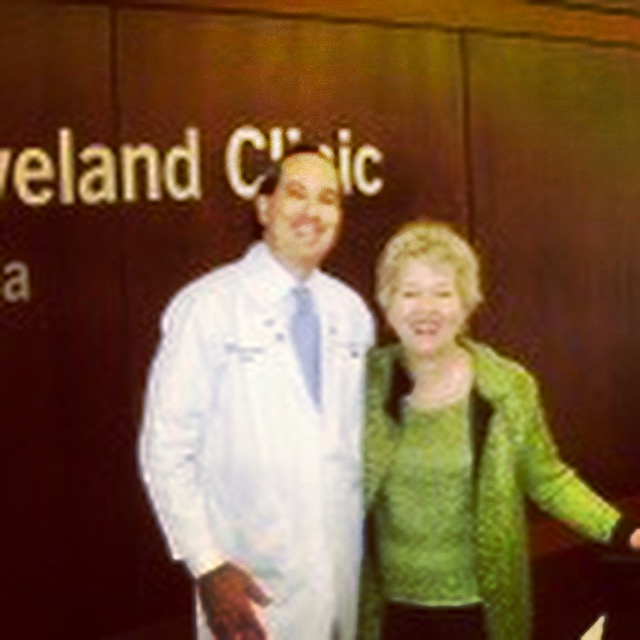 The next big hospital that tried my headphones was Cleveland Clinic Florida, on recommendation from the main Cleveland Clinic in Cleveland. I was even invited down to give a Grand Rounds presentation to surgeons and anesthesiologists.
Dr. David Friedman, seen here in this picture, was so enthusiastic and positive about how much this would help patients (especially compared to “spa music” or “relaxation music,” and pointed out to my that the power of rhythmic entrainment is something that other playlists don’t contain. At that time (2011) we had just the Classical Playlist, but it strongly utilizes classical pieces with rhythmic entrainment and as a cardiologist surgeon, he recognized this difference.
To this day, rhythmic entrainment is the one ingredient that playlists chosen by the patients, don’t have. Rhythmic entrainment is so powerful that just putting on the headphones and starting the music, causes most patients to close their eyes immediately and breathe a hugh sigh of relief.
Johns Hopkins: Suburban Campus
 In about 2013 I became acquainter with Dr. Michael Peck, anesthesiologist at Johns Hopkins in Maryland. Dr. Peck was a strong advocate from the beginning and gave me so many wonderful ideas as well as purchasing a “Cloud Kit” product for their surgery department.
The Cloud Kit was a great idea but for a variety of reasons, not quite as practical as we originally thought. Nevertheless, Dr. Peck was so enthusaistic and said that our (now) 5 therapeutic playlists “should be a regular part of every Operating Room, as well as other parts of the hospital.”
Dr. Peck has been an imporant member of my advisory board and in addition to being a board-certified anesthesiologist, also has an MBA and has been able to advise me about many of the business aspects of getting a medical device into a hospital.
Seven different VA hospitals

In 2013 I was introduced to Chief of Surgery at the Robley Rex V.A. hospital in Louisville, KY. This brilliant surgeon, Earl Gaar, MD, was also a gifted musician who had studied music throughout his youth and had formed a performing group of brass players among V.A. staff called “Top Brass.”This ensemble still performs for events at the V.A. the University of Louisville, and graduations.
Dr. Gaar was fascinated at the idea of using music during the perioperative period and said he had absolutely no doubt that this would work for anxiety throughout, but also for pain perception management and possibly nausea and vomiting afterwards.
He arranged for our first clinical study to be implemented right there at the Robley Rex V.A. It took several years to complete the study and get it published, but the results were thrilling for us and showed a clinically significant decrease in opiod requirements. Here is a link to our study: https://www.surgicalserenitysolutions.com/wp-content/uploads/2025/09/Our-SSS-study.pdf
As a result I became an official vendor to the VA system (Sam.gov) and the Louisville V.A. started out ordering 100 of our pre-loaded headphones.
If YOU and YOUR hospital are ready to hop on the rocket to the future of helping patients through surgery without all of the anxiety and pain medications that are currently routine, go HERE to purchase the headphones.
Go HERE to get the MP3 players.
We have a price list on the product pages but are willing to negotiate with each hospital! Please hurry before the tariffs take effect!