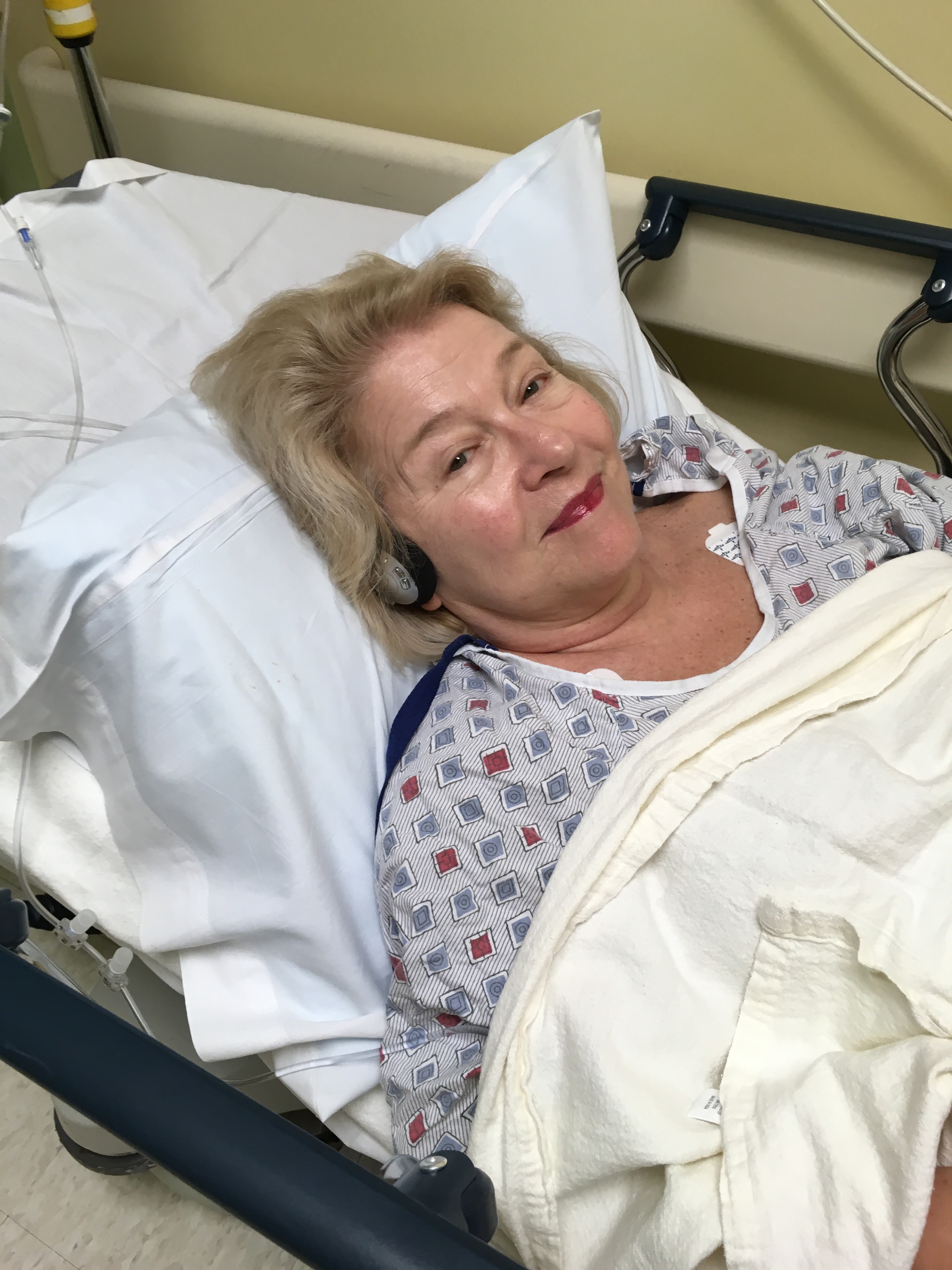
Surgery with Music Series Post #26: What the news media says

FacebooktwitterpinterestlinkedinmailFacebooktwitterpinterestlinkedinmail

Our series of 30 posts on Music with Surgery is rapidly drawing to an end. I thought that perhaps my readers would like to know what some of the major news media have to say about the whole idea. They tend to be critical of such new ideas, but take a look at today’s source: www.livescience.com

“A new study by the Yale School of Medicine confirms previous work showing that surgery patients listening to music require much less sedation.

Previous studies left open the question of whether it was music that did the trick, or just the act of blocking out the sound of dropped surgical instruments and other operating room noise.

In the new study, researchers tested 90 surgery patients at two facilities. Some wore headphones and listened to the music of their choice. Others heard white noise, that hiss and hum common to office buildings that’s designed to drown out harsh noises. Others had no headphones.

Blocking sounds with white noise did not decrease sedative requirements, the study found, music did.”

Doctors and patients should both note that music can be used to supplement sedation in the operating room,” said study team member Zeev Kain, a Yale professor in the Department of Anesthesiology.

The results are detailed in the May issue of the journal Anesthesia & Analgesia.

FacebooktwitterpinterestlinkedinmailFacebooktwitterpinterestlinkedinmail

Surgery with Music Series Post #25: Music with Eye Surgery

FacebooktwitterpinterestlinkedinmailFacebooktwitterpinterestlinkedinmail

In the 20 years that I have been working with surgery patients, helping them choose their perfect music to relax them and assist them through their procedure with a minimum of drugs, I have yet to find a procedure that music can’t help.

This dear lady came to me because she was in the midst of a series of eye surgeries to treat her macular degeneration and her glaucoma. She had already had two of the three surgeries and had to do it with only a local anesthesia. She had emerged from the first two with splitting migraines and a body so stiff and tense she could hardly move for the next several days.

She was feeling somewhat desperate and when she heard about the headphones she was more than ready to try anything! Listen to her story and let her tell you what a positive experience she had:

If you have an eye surgery in your future, you might want to seriously consider giving the headphones a try. The research is there, the experience is there. Music can greatly enhance and improve your surgical experience!

FacebooktwitterpinterestlinkedinmailFacebooktwitterpinterestlinkedinmail

Surgery with Music Series Post #24: Surgery Headphones in the Hospital with Pacemaker Implantation

FacebooktwitterpinterestlinkedinmailFacebooktwitterpinterestlinkedinmail

 
Surgery is by no means the only valuable use for Surgery Serenity Headphones.  As a matter of fact, most any procedure that is done in a hospital or doctor’s office could help ease a patient’s anxiety, soothe their fears and decrease the amoung of anesthesia that might be needed.

One of the first patients that used the headphones in the hospital was a man who had a pacemaker implanted.  Listen to his story and keep music in mind if you or anyone you know needs to have a pacemaker put in.  Although the music is already pre-programmed into the headphones, you can easily put your on favorite music on these headphones if you wish!

FacebooktwitterpinterestlinkedinmailFacebooktwitterpinterestlinkedinmail

Surgery with Music Series Post #22: Can anyone benefit from music during surgery?

FacebooktwitterpinterestlinkedinmailFacebooktwitterpinterestlinkedinmail
Surgical Serenity w colonoscopy

Surgery with music

Can anyone benefit from surgery with music?  Well, do you love music?  Does it relax you, comfort you, make you feel safe and secure?  Are there lots and lots of songs and pieces that remind you of happy times and all of the people you love?  If you answered “yes” to any of these questions, there is an excellent chance that you would benefit from music during your procedure.   Before and after your procedure, I think it’s a great idea to listen to the music that is especially meaningful to you.  During your surgery, whether you’re using a regional anesthesia or general anesthesia, research shows that purely instrumental music that has a slow, steady beat and a soothing, calming mood is best.

Ideally, everyone would be able to create their own playlist for their surgery, but that’s not very realistic.  Most people are a little bit rattled when they find out that they need surgery and sitting down to choose their favorite music and loading it methodically onto their Ipod is just not going to happen.  Then too, many older people wouldn’t know how to put music on an iPod anyway.

In addition, unless you have a brand-new iPod, your’s is likely pretty germy and not something that you want to bring into the operating room.

This is why I decided to create some pre-programmed, cordless headphones that would have the perfect, slow, steady, soothing music for surgery.  The headphones are lightweight and have no cord so that they can’t get tangled with any medical equipment.  The music was chosen by a clinical musicologist who has studied this for over 20 years.  If you have been told that you need surgery and if you love music and would like to experience the many benefits of music during surgery, click HERE.  If you have any questions, please don’t hestitate to contact me through this blog.

FacebooktwitterpinterestlinkedinmailFacebooktwitterpinterestlinkedinmail

Surgery with Music Series Post #21: Is there scientific research on benefits of music with surgery?

FacebooktwitterpinterestlinkedinmailFacebooktwitterpinterestlinkedinmail

Another great question that was sent in by a reader.  The short answer is “YES.”  There is so much research on the use of music before and after surgery that I can not list all the studies here.  You may remember that I spoke at the Cleveland Clinic Florida about recent research in music with surgery and there I had chosen the most recent 15 or so studies from over the past decade.

The highlights of this research can be found HERE.  You will see that studies have been done not only at well-known institutions such as Yale University, but also from around the world.  Most of the studies focus on music before and after surgery, but increasingly, research is now being conducted on music during surgery.  Currently out surgery headphones are the focus of a medical study at the VA Hospital here in Louisville, KY and results should be available by the end of this year.

There are so many documented  benefits of music surrounding surgery and other medical procedures.   Do you want to take less anxiety medication before, less anesthesia during, and less pain medication afterwards?  Do you want to recover faster and side-step the effects of so many medications?  Do you want to avoid the “brain fog” that often hangs on for weeks and weeks after surgery?  Then go HERE and order your surgery headphones!

FacebooktwitterpinterestlinkedinmailFacebooktwitterpinterestlinkedinmail

Surgery with Music Series Post #16: Headphones vs Earbuds

FacebooktwitterpinterestlinkedinmailFacebooktwitterpinterestlinkedinmail

If you’re to be going through surgery of any kind, or dental work, or chemotherapy or kidney dialysis, etc., then you need to understand the benefits of headphones vs earbuds.   Everyone’s ear is a little bit different externally and internally and there is just no one that one size and type of earbud can fit everyone.  On myself, earbuds constantly fall out.  I wore them at the fitness center for years and I was constantly needed to re-insert them because they had fallen out.

With headphones, not only do they gently cover the entire ear, but you can adjust the volume so that you can comfortably and effectively hear the music, but it’s enough to block external conversations that you don’t want to hear.  If the doctor does need to say something to you or ask you a question, he can move in toward you just a little bit and direct a question to you and you can easily hear him!

Not only that, but our headphones are cordless and so there’s nothing to get tangled up with medical or dental equipment!  Earbuds have a cord that hangs down and connects to you iPod or other MP3 music device.  When you weigh the pros and cons of each, I think you’ll want to use headphones.  Let me know your questions?

FacebooktwitterpinterestlinkedinmailFacebooktwitterpinterestlinkedinmail

Surgery with Music Series Post #15: Talking with your Surgeon about Using Music

FacebooktwitterpinterestlinkedinmailFacebooktwitterpinterestlinkedinmail

 Today many surgeons and anesthesiologists are aware of the benefits of music before, during and after the surgical procedure.  But occasionally, a patient comes to me or calls me saying that their surgeon doesn’t like the idea?  Why?  Usually because the surgeon has not read all of the latest research on the the many benefits that music brings to the situation.  Some surgeons don’t understand the concept of entrainment, whereby the vibration of the music causes your heart and breathing to slow down and synchronize with the music.  Even after your ears cease to hear the music through the headphones, the vibrations of this music cause your inner rhythms of heartbeat and music to synchronize with that tempo and all with the mood of the music which is peaceful and serene.   For that reason, it really doesn’t even matter if you like classical music or not because when you are deeply “asleep” under the anesthesia, you won’t even hear the music as music!

I’ve actually written a free report entitled “How to Talk with Your Doctor About Using Music with your Surgery.”  Just click on this link to get it for free!  Don’t miss out on this important step of the process!

FacebooktwitterpinterestlinkedinmailFacebooktwitterpinterestlinkedinmail

Surgery with Music Series Post #13: Music with Local Anesthesia

FacebooktwitterpinterestlinkedinmailFacebooktwitterpinterestlinkedinmail

Local anesthesia involves injecting a numbing agent into a localized area. The area that will be affected by the surgery receives anesthesia to block pain sensation. Local anesthesia is only used during surgeries that are fairly minor and that only involve a small area of the body. In many cases, you will be able to remain awake and alert during the procedure. However, some surgeries require the use of sedation that will allow you to relax or even sleep through the surgery.  (source:  http://www.anesthesiaprogress.com/what-you-need-to-know-about-anesthesia.html)

Probably, local anesthesia is the easiest medical/dental situation in which to use the Surgical Serenity Headphones.  The dentist particularly is a very unpopular place to go and not surprisingly.  Who wants to be laid on their back, machines put into your mouth and a man leaning into your mouth and drilling on you with that loud, insistent, painful sound?  (Not to be overly dramatic!)

On the other hand, dentistry was a leader, back in the 1950’s of what was called audio anesthesia.  My dentist in SC actually gave me hadphones in 1958 or so that had 7 different channels on them with 7 different types of music and one with “white noise.”  They were huge clunky things, but I remember liking them a lot!  Our headphones are super-light and yet they cover the ears enough to greatly muffle the sound of the drill.  Give them a try!

FacebooktwitterpinterestlinkedinmailFacebooktwitterpinterestlinkedinmail

Surgery with Music Series Post #12: Music with Regional Anesthesia

FacebooktwitterpinterestlinkedinmailFacebooktwitterpinterestlinkedinmail

Regional anesthesia is used in many, many surgical procedures and medical procedures.  The following description is taken from http://www.seanesthesiology.com/regional-anesthesia.html

and gives an excellent overview of various examples of regional anesthesia.

What is Regional Anesthesia?
Regional anesthesia is used when only one area of the body, like an arm or a leg, needs to be anesthetized in order to perform an operation. There are several types of regional anesthesia.

What are the different types of regional anesthesia?
• Spinal Anesthesia – Spinal anesthesia involves injecting a local anesthetic into the fluid
surrounding spinal nerves. Once injected, the medicine mixes with spinal fluid in the
lower back and numbs the nerves it contacts, effectively blocking sensation and pain.

Spinal anesthesia takes effect rapidly and is safe and effective for any surgery occurring
below the ribcage. It is especially effective for surgery on the lower abdomen and legs.

• Epidural Anesthesia – Epidural anesthesia involves the placement of a catheter into
a small space within the vertebral column just before the spinal fluid. Depending on the
nerves targeted, the epidural can be placed in various regions of the back from the neck
to the tailbone. Epidural medications can be given through this catheter to provide
numbness for the surgery, and also can be used to provide pain relief
in the post-operative period.

• Nerve Blocks – Your anesthesiologist can use a variety of nerve blocks to ensure
comfort throughout a surgical procedure. Often a group of nerves, called a plexus
or ganglion, that causes pain to a specific organ or body region can be blocked
with local anesthetics. Below are some of the most common nerve blocks and what
body parts they are associated with.
o Trigeminal nerve blocks (face)
o Ophthalmic nerve block (eyelids and scalp)
o Supraorbital nerve block (forehead)
o Maxillary nerve block (upper jaw)
o Sphenopalatine nerve block (nose and palate)
o Cervical epidural, thoracic epidural, and lumbar epidural block (neck and back)
o Cervical plexus block and cervical para-vertebral block (shoulder and upper neck)
o Brachial plexus block, elbow block, and wrist block (shoulder/arm/hand,
elbow, and wrist)
o Subarachnoid block and celiac plexus block (abdomen and pelvis)
• Intravenous Regional Anesthesia – Intravenous regional anesthesia is the process
of placing an IV catheter into a vein in your lower leg or arm so that the local anesthetic
can be administered. An important part of intravenous regional anesthesia is placing
a tourniquet above the area to ensure the medicine stays in the arm or leg that is being
anesthetized. Feeling will return to the area once the tourniquet is removed.

What are the most common procedures used with regional anesthesia?
Regional anesthesia can be used for many procedures, but the most common are orthopedic and obstetric procedures.

Are there side effects associated with regional anesthesia?
Patient safety is extremely important. Although anesthesia can carry some risks, major side effects or complications are uncommon. You can be assured that our physicians are extremely qualified to handle your anesthesia care. Southeast Anesthesiology Consultants regularly exceeds the national standards of care and safety. The specific risks of anesthesia vary with the particular procedure and the condition of the patient. You should ask your anesthesiologist about any risks that may be associated with your anesthesia.

What are some of the side effects of regional anesthesia?
Although uncommon, potential risks include:
• Swelling
• Infection at the injection site
• Systemic toxicity (rare)
• Heart or lung problems (rare)

How can music make a difference?   As with so many medical/surgical situations, one of the main things music through headphones will do is simply distract you.  But with headphones, they will also create a sonic cocoon around you that keeps other hospital and clinic sounds away from your ears.  The fact that our headphones are programmed with music chosen specifically for surgery makes them ideal to calm you and regulate your heart-rate and breathing with musical entrainment!  Post any questions you might have here as a comment!

FacebooktwitterpinterestlinkedinmailFacebooktwitterpinterestlinkedinmail

Surgery with Music Series Post #10: How does music affect other medication requirements

FacebooktwitterpinterestlinkedinmailFacebooktwitterpinterestlinkedinmail

 This is such a simple concept, and yet, very few hospitals or sugery centers implement therapeutic music.  There are many, many studies that document that music pre- and post-surgery can decrease the use of  anxiety medications before and pain medication afterwards.  Studies have been conducted on major hospitals and universities all over the world.  As recently as April 1, 2011 I presented a Grand Rounds at Cleveland Clinic Florida that went over the top studies for music before, during and after surgery.  To see highlights of this, click HERE.

How does it work?  Before surgery, when you put on the headphones, the music enters your brain through the 8th cranial nerve.  Within moments, you close your eyes and your heartrate and breathing begin to slow down and become steady.  You begin to relax, naturally, and the need for I.V. anxiety medication greatly reduces.  After surgery, the headphones are again used as you move into the recovery area and your body stays relaxed as you come out from under the anesthesia. 

The recovery room is known for it’s busy-ness and (often) lack of peace and quiet.  In today’s crowded hospitals, nurses are trying to take care of many patients at the same time and those without music are often moaning and crying out.  Those with the headphones are not only staying relaxed, but the headphones help block out other patients cries and sounds of pain and discomfort.

Some hospitals have tried having CD players at bedside, but that doesn’t work nearly as well as the pre=programmed headphones.  A recent patient wrote this to me:

  • I kept expecting to be nervous  as the date of surgery rolled around but couldn’t seem to summon up any anxiety
  • My blood pressure has dropped to normal limits
  • I “knew ” I wouldn’t be able to sleep prior to surgery but guess what I slept well
  • I was calm and relaxed before surgery
  • The dentist and staff tucked me in, made sure I had my music (I had my i POD set to repeat ) and away we went.
  • Post -op I was still relaxed – had a sleep and had little pain- I had a bunch of work done – I did take an Advil at bedtime just for “insurance” but really didn’t need it.
  • My mouth is healing beautifull

Thank you for the wonderful music.

Blessings, Anne

If you have any questions at all, please don’t hesitate to leave them as comments on this blog and I will get right back to you!

FacebooktwitterpinterestlinkedinmailFacebooktwitterpinterestlinkedinmail
Go to Top